1970s Studio Gear Timeline

The 1970s saw the rise of a new era in studio effects. Analogue processors such as phasers, flangers, and tape delays dominated the early part of the decade, shaping countless classic recordings. By the late 1970s, however, digital technology began to emerge, introducing the first commercially available digital delays and reverbs. This shift marked the beginning of a gradual transition, with analogue and digital effects starting to coexist and redefine the creative possibilities in the studio.

1970
Synthesisers & Keyboards
/ Made In U.S.A.
The Moog Minimoog Model D transformed Moog’s modular synthesis technology into a compact, monophonic performance instrument with three oscillators, noise and external audio sources, a five-input mixer, resonant 24dB-per-octave low-pass filter, dual contour generators and voltage-controlled amplification. Its 44-key keyboard, glide, pitch wheel, modulation wheel and pre-wired architecture eliminated the need for patch cords and made sophisticated voltage-controlled synthesis practical on stage. Released in 1970 and produced in more than 12,000 original examples, the Moog Minimoog Model D became one of the defining electronic instruments of the 1970s and established a design architecture that influenced generations of synthesisers.
1970
Other Analogue Effects
Made In U.S.A. /
The Allison Research Kepex 500 was a 1970 keyable program expander for professional multi-track studios, designed to reduce unwanted track noise while also providing external keying, creative dynamic control and solid-state peak metering.
1970
Reel to Reel Recorders
/ Made In Switzerland
The Studer A80 series is a modular professional tape recorder family spanning mono, stereo, and multitrack models, built on a rigid die-cast chassis with logic-controlled transport, servo capstan, electronic tension control, and plug-in amplifier cards. Interchangeable headblocks, selectable NAB or CCIR equalisation, precise bias and erase systems, and comprehensive local or remote control made the A80 a service-friendly studio standard across its original and later VU Mk II and Mk III versions.
1970
Equalisers
Made In U.S.A. /
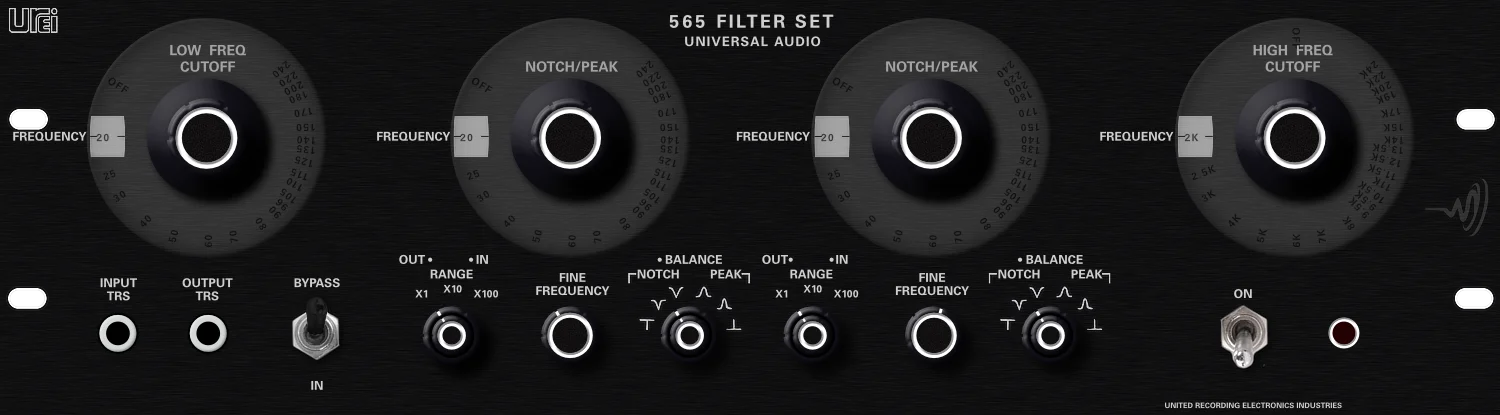
The Urei 565 Filter Set introduces to the recording studio and motion picture sound department an effective tool for 'saving' problem tracks, and for creating innovative special effects.
1971
Modulation Effects
/ Made In U.S.A.
The Eventide Clockworks Instant Phaser was designed specifically to eliminate the costly and tedious job of setting up and implementing the special effect known as phasing or flanging.
1971
Microphone
Made In Austria /
The AKG C414 is a one-inch large diaphragm condenser microphone family widely used in professional studio, broadcast, and stage applications, recognised for its versatility, reliability, and long-standing role in recording history.
1971
Classic Track

Derek & The Dominos

Derek and the Dominos had a short career that lasted barely a year between 1970 and 1971, but in that time they recorded the album Layla and Other Assorted Love Songs. This record is widely regarded as Eric Clapton’s greatest achievement, and its centrepiece, Layla, remains his most iconic song. Released in March 1971, it […]

Engineered by: Ron & Howard Albert
Mixed by: Jay Mark & Steve Rinkoff
1971
Reel to Reel Recorders
Made In U.S.A. /
The MCI JH-16 Multitrack Recorder combined advanced transport control, excellent service access, a flexible remote system, and a thoughtfully engineered console design. Its construction and layout were intended to minimise downtime while maximising operational ease, making it a robust and highly capable studio recorder of its era.
1971
Compressors & Limiters
/ Made In U.S.A.
The Allison Research Gain Brain 700 was a 1971 modular studio limiter with peak and quasi-RMS operation, dual-threshold control, fast gain reduction metering and compatibility with Allison Research console and rack mounting systems.
1971
Equalisers
Made In U.S.A. /
The ITI MEP-230 is one of the earliest production parametric equalisers, likely emerging around 1971, and represents a refined implementation of Massenburg and Macneal’s early parametric EQ concepts. Its scarcity and evolving internal histories complicate exact documentation, but its role in the lineage of mastering EQ is clear and influential.

Continue exploring innovation in the next decade