
7 March 2024
Digital Audio Tape (DAT)
Digital Audio Tape (DAT or R-DAT) emerged as a digital audio recording and playback format by Sony, in 1987. Resembling a Compact Cassette in appearance, it utilises 3.81 mm / 0.15″ magnetic tape within a protective shell but boasts a compact size of 73 mm × 54 mm × 10.5 mm, approximately half the size. Unlike analogue recordings, DAT employs digital recording technology, allowing for sampling rates equal to or surpassing those of a CD (44.1, 48, or 32 kHz) at 16 bits quantisation. Notably, DAT offers exact clones of digital sources, a feature absent in other digital media like Digital Compact Cassette or non-Hi-MD MiniDisc, which employ lossy data-reduction systems.

Compact Recordable Digital Audio
DAT (Digital Audio Tape)
The Simple Explanation
Similar to most videocassette formats, DAT cassettes facilitate recording and playback in one direction only, unlike analogue compact audio cassettes. However, numerous DAT recorders possess the capability to record program numbers and IDs, enabling the selection of individual tracks akin to CD players. Despite being positioned as a successor to analogue audio compact cassettes, DAT failed to gain widespread consumer adoption due to cost and concerns within the music industry regarding unauthorised high-quality copies.
Nevertheless, it found moderate success in professional markets and as a computer storage medium, eventually evolving into the Digital Data Storage format. With Sony ceasing production of new recorders, accessing archived DAT recordings may prove challenging unless copied to alternative formats or hard drives. Additionally, the emergence of sticky-shed syndrome poses a threat to audio stored exclusively in this medium, prompting concerns among engineers tasked with re-mastering archival DAT recordings.
DAT tapes were renowned for their compact dimensions, measuring approximately 73 mm in width, 54 mm in height, and 10.5 mm in thickness. This sleek and portable form factor marked a significant advancement in audio storage technology, being roughly half the size of a traditional Compact Cassette. Despite their diminutive size, DAT tapes offered ample storage capacity and high-quality audio recording capabilities.
The Detailed Explanation
The DAT standard was one of the most ambitious audio format specifications of its era, created to deliver true digital recording in a tape-based medium small enough for both domestic and professional use. In retrospective terms, it represented an extraordinary attempt to combine the practicality of the compact cassette with the precision of the compact disc, while borrowing heavily from video technology to overcome the bandwidth limitations that had previously made high-quality digital audio tape recording impractical. Rather than relying on a conventional stationary audio head system, DAT employed a rotary head arrangement derived from videocassette design, allowing it to record pulse-code modulation audio with the bandwidth required for serious digital storage. At the time, this made DAT not only technically advanced but genuinely unlike any earlier audio tape format.
The path to the DAT standard was lengthy and politically fraught. Work on the format began in 1981, and after years of prototype demonstrations, debate, and competing technical proposals, 81 companies formed the DAT Conference in June 1983 to evaluate the future of the format. Two systems were considered: R-DAT, which used rotary heads, and S-DAT, which relied on stationary heads. In August 1986, the Conference completed the R-DAT standard, and when the format finally entered the market in March 1987, R-DAT effectively became known simply as DAT. Standardisation was handled by the Electronics Industry Association of Japan, ensuring cross-manufacturer compatibility, which was essential if the format was to gain traction as a serious recording medium rather than fragment into competing implementations.
From a technical standpoint, DAT was highly sophisticated. Audio was recorded and replayed using PCM, giving the format the core advantages associated with digital audio: wide dynamic range, low distortion, strong signal-to-noise performance, and negligible wow and flutter when compared with analogue tape systems. Yet the format’s significance was not limited to raw sound quality. DAT introduced a level of operational intelligence and data management that went far beyond earlier audio tape designs. It was not simply a digital replacement for analogue cassette. It was a complex information storage system built around audio, metadata, compatibility rules, and machine-readable transport control.
One of the most important aspects of the DAT standard was its support for multiple sampling frequencies. DAT could play back 32kHz, 44.1kHz, and 48kHz material, allowing it to sit between consumer and professional digital ecosystems. In consumer machines, however, recording at 44.1kHz was deliberately disabled in order to prevent straightforward digital cloning of compact discs and prerecorded DAT releases. That restriction did not apply to professional DAT machines, which could record at 44.1kHz and therefore integrate more freely into studio workflows. This distinction became one of the defining characteristics of DAT in practice, with professional decks offering the flexibility engineers expected, while consumer units were constrained by anti-copy policies built into the format’s wider implementation.
Digital input and output capability was another major part of the standard. DAT decks could be connected directly to other digital devices for high-quality signal transfer at supported sample rates, and subcode data travelled alongside the audio itself. This brought a degree of precision and convenience that analogue tape simply could not offer. However, it also introduced formal copy management. A DAT deck could detect a copy-inhibit flag recorded in the incoming digital bitstream and refuse to make a digital copy. In retrospective terms, this is one of the clearest examples of DAT sitting at the intersection of technical innovation and industry anxiety. The format was advanced enough to make perfect consumer-level digital duplication possible, but the standard itself was shaped by efforts to limit that possibility.
The subcode system was among DAT’s most sophisticated features and remains one of the clearest signs of how far ahead of earlier tape formats it really was. Users could write, erase, and rewrite non-audio information independently of the programme material itself. This included start IDs to mark the beginning of a selection, skip IDs to instruct a machine to pass over a section, and program numbers to define the sequence of selections on a tape. Because this data could be entered during recording or playback, manually or automatically, DAT offered advanced search and navigation functions that felt far closer to disc-based playback logic than to traditional linear tape handling. A deck could scan for start IDs from the current point, search for a specific programme number, or skip marked content during playback. For users coming from analogue cassette, this was a significant leap in sophistication.
The standard also distinguished clearly between recorded and unrecorded areas of tape. Even where no audio signal was present, the track format itself remained encoded in recorded sections, allowing the machine to differentiate them from genuinely blank tape. This mattered because blank sections could slow search functions, so the format worked best when unnecessary blank passages were avoided. This was another example of DAT behaving less like a simple tape medium and more like a structured digital storage format with transport logic built into its design.
Physically, the DAT cassette was purpose-built and standardised specifically for the format. Measuring 73mm x 54mm x 10.5mm and weighing about 20g, it was notably smaller than the analogue compact cassette, yet it still used 3.81mm tape, the same tape width as eighth-inch analogue cassette tape. Typical tape thickness was around 13 microns, with the oxide coating accounting for roughly three microns. A standard cassette could store up to two hours of audio on approximately 60 metres of tape, while longer playing times of four to six hours could be achieved by lowering tape speed, reducing sampling rate, changing hub dimensions, or using thinner tape. Blank DAT cassettes used metal-powder oxide, while prerecorded tapes used barium-ferrite oxide, reflecting the differing requirements of re-recordable and factory-produced media.
The cassette design itself was more elaborate than it first appeared. DAT cassettes were engineered to protect the tape until the moment of loading. A retracting slider and door mechanism concealed the hubs and tape path, exposing them only when the cassette was properly loaded into a machine. A hub brake mechanism helped minimise tape slack, and the cassette incorporated provisions for detecting beginning and end of tape optically, either by transmitted or reflected light. Recognition holes on the cassette underside allowed a recorder to identify the inserted tape type, including tape thickness, track pitch, and whether the cassette was prerecorded or re-recordable. Alignment holes and a top notch for loading grip added to the overall precision of the format. In purely mechanical terms, DAT was a remarkably engineered small cassette system.
Accidental erasure protection was also built into the cassette itself. A safety tab on one end could be moved to open a copy-prohibit hole on the underside, preventing recording. To record again, the tab had to be returned to its original position. In use, this gave DAT a familiar convenience for anyone accustomed to analogue cassette formats, but it sat within a much more tightly specified and technically aware media architecture.
The standard defined four record/playback modes and two playback-only modes. The universally implemented standard recording mode used 16-bit linear quantisation at 48kHz. The two playback-only modes used 44.1kHz sampling, supporting prerecorded material while preserving the consumer recording restrictions already mentioned. Beyond this, the standard also defined three additional 32kHz modes called Option 1, Option 2, and Option 3. Option 1 provided two-hour recording using 16-bit linear quantisation. Option 2 extended recording time to four hours by using 12-bit nonlinear quantisation and by halving both tape speed and drum rotation speed. Option 3 offered 4-channel recording and playback, also with 12-bit nonlinear quantisation. These lower-rate options aligned DAT with certain direct broadcast satellite applications, particularly in markets such as Japan, India, and parts of Europe, and reveal just how broadly the format’s designers imagined DAT might be used.
Looking back, the DAT standard was arguably one of the most complete and technically refined tape recording specifications ever developed. It combined compact physical media, advanced transport control, digital audio storage, metadata handling, multiple operating modes, and strict interoperability rules in a single standardised format. It also reflected the tensions of its time, balancing professional flexibility against consumer copy restrictions, and innovation against commercial caution. Although DAT is now a legacy format, the standard itself remains a remarkable piece of audio engineering history, representing a moment when tape technology reached perhaps its most sophisticated digital form before file-based recording would eventually make such mechanical complexity obsolete.

Sony produced a ‘cleaning tape’ for the DAT machines they produced, they were however known to be a little abrassive.


Most of the major tape manufacturers produced tape for DAT during the peak period of the format.
Consumer and professional
DAT Recorder Technology
(See above detailed explanation for full details outlined here.) DAT technology is heavily influenced by video recorders, employing a rotating head and helical scan method for data recording. This design distinguishes DATs from analogue tapes or open-reel digital formats like ProDigi or DASH, as they cannot be physically edited in a cut-and-splice manner. The standardisation of DAT began in 1983 with the establishment of a meeting to unify digital audio recording standards across companies.
By 1985, two standards emerged: R-DAT (Rotating Digital Audio Tape) with a rotary head, and S-DAT (Stationary Digital Audio Tape) with a fixed head. While S-DAT resembled the Compact Cassette format, challenges in developing a fixed recording head for high-density recording led to the adoption of the rotating head for R-DAT, leveraging its success in VCR formats like VHS & Betamax. Although R-DAT became synonymous with “DAT,” an S-DAT media format later emerged as the Digital Compact Cassette. Sony further introduced the NT R-DAT format to replace Microcassettes and Mini-Cassettes.
The DAT standard offers four sampling modes: 32 kHz at 12 bits, and 32 kHz, 44.1 kHz, or 48 kHz at 16 bits, with some recorders supporting recording at 96 kHz and 24 bits (HHS). Early consumer-market machines lacked 44.1 kHz recording capability, preventing them from ‘cloning’ compact discs. Sampling quality directly impacts recording duration, with lower quality allowing longer recording times on the same tape. Subcodes embedded in the signal data facilitate track indexing and fast seeking. While two-channel stereo recording is supported under all sampling rates and bit depths, the R-DAT standard allows for 4-channel recording at 32 kHz.
“DAT tapes vary in length from 15 to 180 minutes, with a 120-minute tape measuring 60 meters. Longer DAT tapes pose challenges due to thinner media, with transport speeds varying based on the sampling rate, ranging from 8.15 mm/s for 48 kHz and 44.1 kHz to 4.075 mm/s for 32 kHz. It the professional world, the 120 minutes would be avoided as the thinner substrate was prone to stretching and at times, getting tangled in the machine in the worst cases.”

“The Sony DTC-1000ES DAT Recorder holds the distinction of being the world’s first commercially available Consumer DAT recorder. Introduced by Sony, the DTC-1000ES revolutionised audio recording in 1987. Its advanced features and high-fidelity recording capabilities set a new standard for audio consumers, well, at least those who got on board.”
The End of an Era
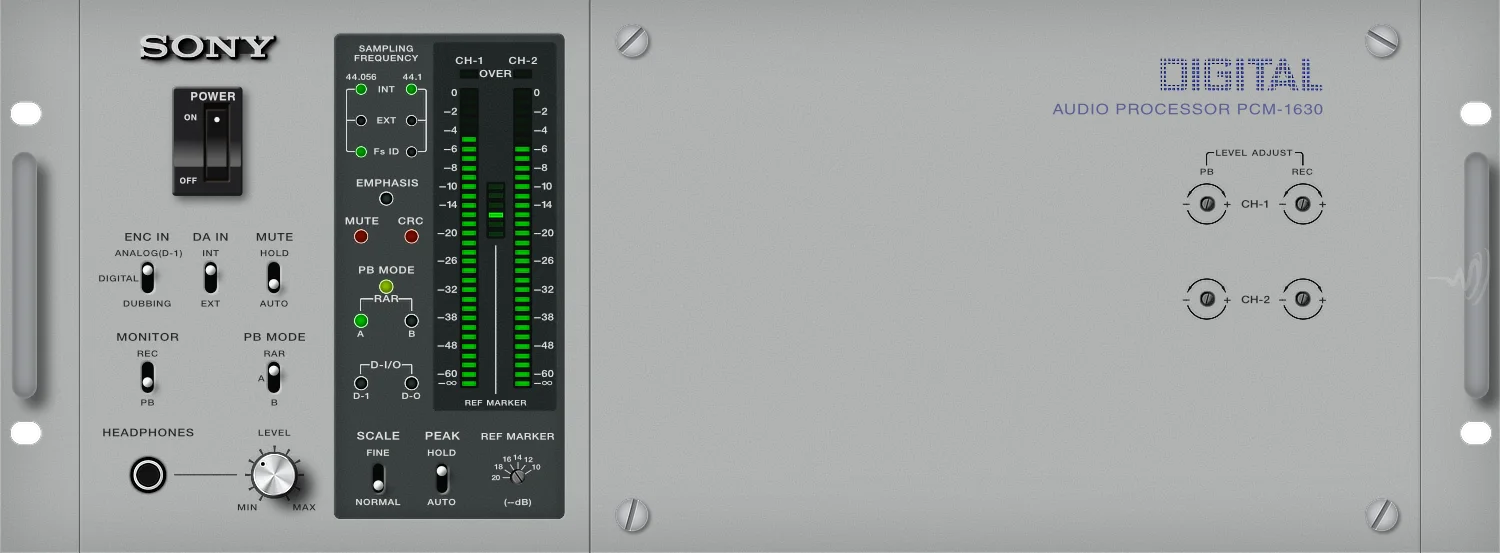
Sony PCM-1630 Processor
The Sony PCM-1630 and Sony DMR-4000 Master Recorder were groundbreaking devices used for audio mastering before the advent of the DAT format. The Sony PCM-1630 is a digital audio processor, designed to be used with a Sony BVU-800DA/800DB videocassette recorder, a DMR-2000/4000 digital master recorder or any other Sony professional VTR to create a professional PCM recording and playback system. Although there were a few predecessors, this system was the final ‘system’ prior to the release of the DAT format.
Upon the release of the aforementioned Sony DTC-1000ES, a number of studios used it to create their masters, until Sony released their first professional model, the Sony PCM-2500, which was in essence, a DTC-1000ES drive mechanism, with a second chassis containing all of the electronics. Being a professional machine it was capable of recording at the CD rate of 44.1kHz, where the consumer model could not, making it far better suited for mastering duties.
Sony PCM-2500 Professional DAT Recorder
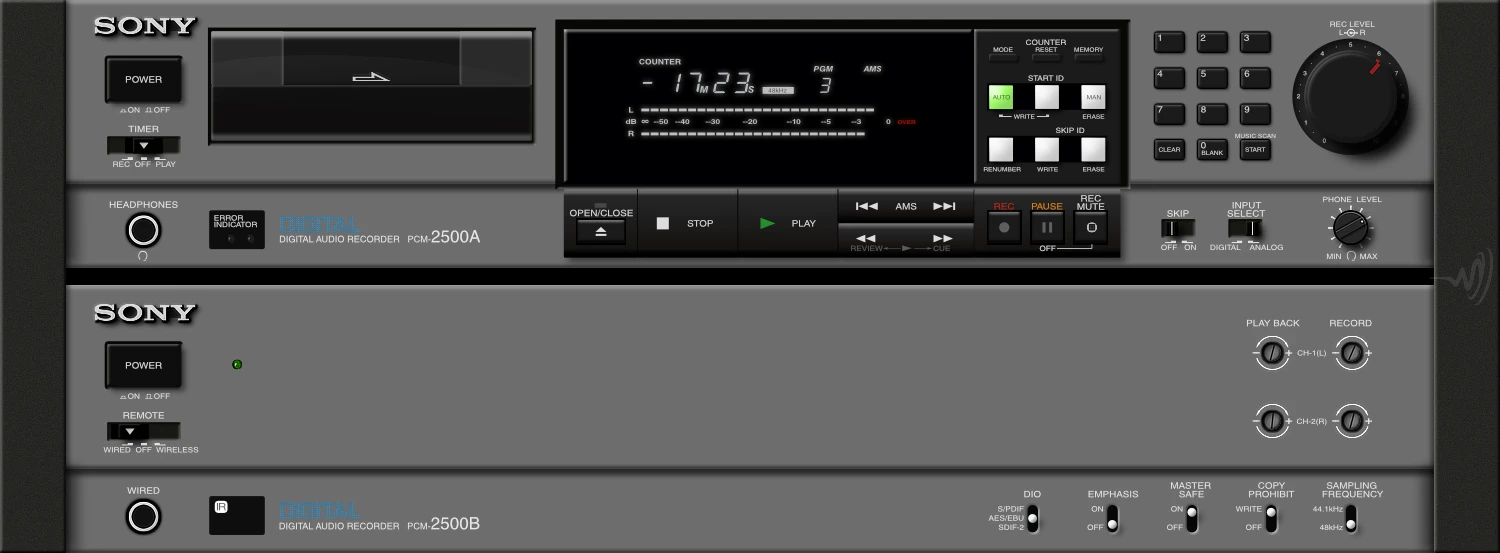
The Sony PCM-2500 was the first commercially available professional DAT recorder designed specifically for studio mastering. Introduced by Sony, a leader in audio technology, the PCM-2500 revolutionised the audio recording industry upon its release. Offering pristine digital audio quality and advanced features tailored for professional mastering applications, the PCM-2500 became a ‘must have’ in recording studios worldwide. Its robust construction, versatile connectivity options, and precise recording capabilities set new standards for audio engineering, making it an indispensable tool for mastering engineers seeking uncompromising quality and reliability…for it’s time.
DAT compared to Cassette, Minidisc, Hard Disc and PCM Recorders
While DAT became a popular professional format, it occupied a very specific niche when compared with the other options of its era. Analogue cassette remained far cheaper and more widespread, but could not compete with DAT’s low noise, wider bandwidth, or its ability to make transparent digital copies. MiniDisc introduced editing and greater portability for consumers, yet its ATRAC compression meant it was never suitable for professional mastering or archival work. Early hard disk recorders offered instant access and non linear operation, but were still expensive, limited in storage, and far less reliable than DAT machines that had already matured. PCM adaptors provided high quality digital recording years before DAT existed, although they required domestic video recorders as a transport, making them bulky and impractical for everyday studio use. This combination of convenience, fidelity, and professional workflow integration is what allowed DAT to dominate mix and mastering rooms throughout the 1990s.
Consumer DATs Downfall
The SCMS (Scums) Chip
In the late 1980s, the Recording Industry Association of America (RIAA) mounted a campaign against the introduction of DAT devices into the United States. Initially, the organisation threatened legal action against any manufacturer attempting to sell DAT machines in the country. Subsequently, it sought to impose restrictions on DAT recorders to prevent the unauthorised copying of LPs, CDs, and prerecorded cassettes.
One such effort, the Digital Audio Recorder Copycode Act of 1987 (introduced by Sen. Al Gore and Rep. Waxman), championed by CBS Records president Walter Yetnikoff, proposed the incorporation of a technology called CopyCode into DAT machines. This required the inclusion of a chip to detect attempts to copy material recorded with a notch filter, resulting in distorted sound for copyrighted prerecorded music, whether analogue or digital.
However, a National Bureau of Standards study revealed that the effects were clearly audible and ineffective at preventing copying, thus averting the audible pollution of prerecorded music. CBS’s opposition softened after Sony, a major DAT manufacturer, acquired CBS Records in January 1988. By June 1989, an agreement was reached, with the only concession to the RIAA being a practical recommendation from manufacturers to Congress.
This recommendation led to the enactment of legislation requiring recorders to incorporate a Serial Copy Management System (or SCMS for short, and referred to those who opposed it, the SCUMS chip) to prevent digital copying beyond a single generation. This requirement was established as part of the Audio Home Recording Act of 1992, which also imposed “royalty” taxes on DAT recorders and blank media.
One of the primary drawbacks of SCMS was its limitation on making digital copies of audio recordings. Specifically, SCMS mandated that digital copies could only be made from an original source, such as a CD or a professionally produced DAT recording. Attempting to copy a digital recording onto another DAT tape resulted in the recording being flagged as a second-generation copy, and subsequent attempts to copy from this tape were prevented. This restriction significantly hindered the flexibility and convenience of DAT recorders for consumers, who often wanted to make backup copies of their personal recordings or share recordings with friends.
Furthermore, the presence of SCMS added complexity to the user experience and led to confusion among consumers. Many users found it difficult to navigate the SCMS restrictions and were frustrated by their inability to copy certain recordings. Additionally, SCMS raised concerns about interoperability between different brands of DAT recorders, as some manufacturers implemented SCMS differently or chose not to support it at all (Some high-end Professional DAT Recorders did not have this restriction).
Overall, the implementation of SCMS had a detrimental effect on the popularity and adoption of DAT recorders in the consumer market. The restrictions imposed by SCMS limited the appeal of DAT recorders for casual users and contributed to the eventual decline of the format in favour of other digital recording technologies.
Professional
Recorders
DAT found widespread use in the professional audio recording industry during the 1990s and continues to be utilised to some extent today, primarily due to the extensive archives created during that era. While most record labels have implemented programs to transfer these tapes to computer-based databases, DAT’s lossless encoding ensured the creation of secure master tapes without introducing additional tape noise (hiss) onto the recording.
With the right setup, a DAT recording could be created without the need for analogue decoding until the final output stage. This was made possible by utilising digital multi-track recorders and mixing consoles to establish a fully digital chain, allowing the audio to remain digital from the initial AD converter after the mic preamp until it reaches a CD player.
While initially developed by Sony, the DAT format garnered widespread adoption among numerous other professional recorder manufacturers, including Studer, Panasonic, Otari, Fostex, Tascam and others. Over time, these manufacturers crafted exceptional machines that played pivotal roles in the mastering of many classic recordings. A few of these amazing machines appear below…
Professional Dominance
Album Mastering And DAT
During the late 1980s and throughout the 1990s, DAT became the dominant delivery format for final masters in professional studios. Countless commercial releases from major labels were prepared on DAT as the industry moved away from analogue tape for two track masters. The format offered low noise, fast cueing, and straightforward digital transfers that suited the production workflow of the era.
By the mid 1990s it was common for mastering studios to provide both a DAT master and a production CD-R master, ensuring compatibility with the duplication plants of the time. As DAW based mastering systems improved and CD-R technology became more reliable, the reliance on DAT gradually declined, but for more than a decade it served as one of the most widely used mastering formats in the industry.
Otari DTR-90 DAT Recorder
The Otari DTR-90 is a well-regarded professional DAT recorder, known for its high performance and reliability. As Otari’s top model in this category, it offered advanced features and precise engineering, making it a popular choice for mastering studios and professional audio production.

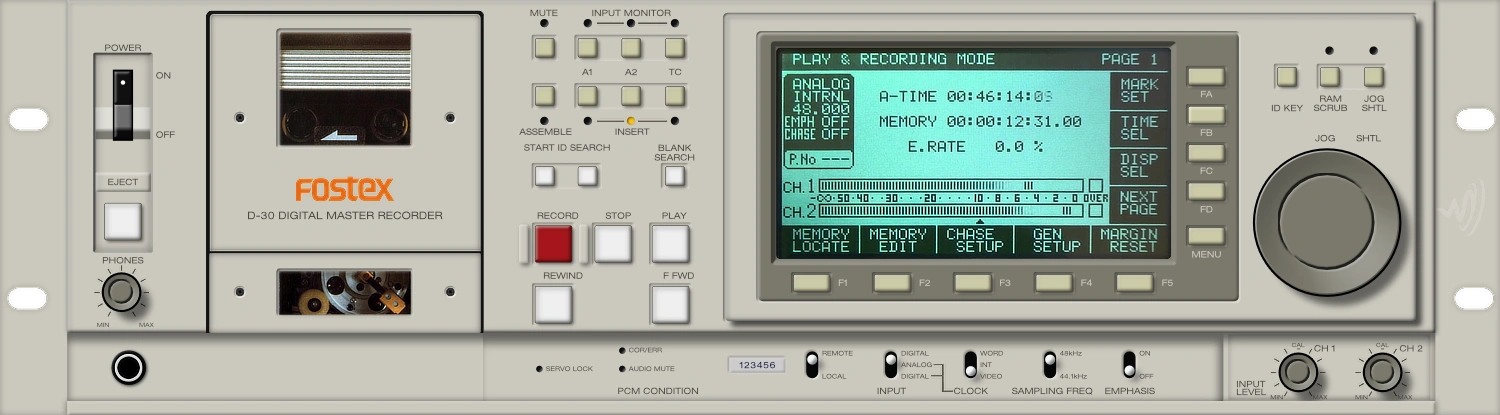
Fostex D-30 DAT Recorder
Fostex introduced timecode DAT in 1987, combining expertise in tape transport control with emerging digital technology. At the time, this innovation was regarded as a major breakthrough in the industry, and its impact is still evident in recording studios worldwide. This progression continues with the release of the Fostex D-30.
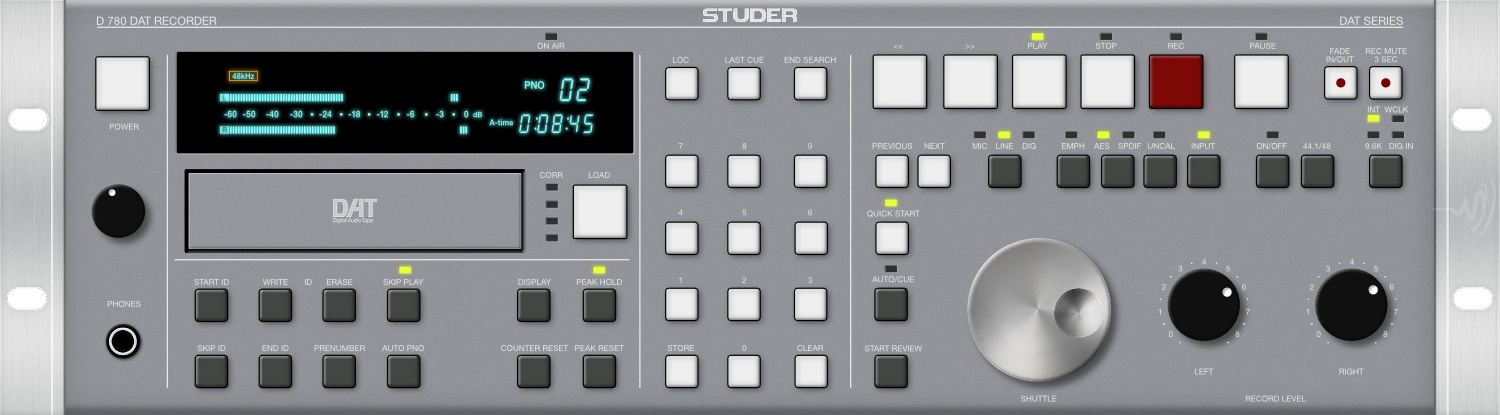
Studer D780 DAT Recorder
The Studer D780 is a professional DAT recorder known for its audio quality and durable construction. As one of Studer’s high-end models, it showcased the company’s approach to DAT technology at the time. Used in mastering studios and professional audio production, the D780 was valued for its reliability and precision, making it a common choice among audio engineers.
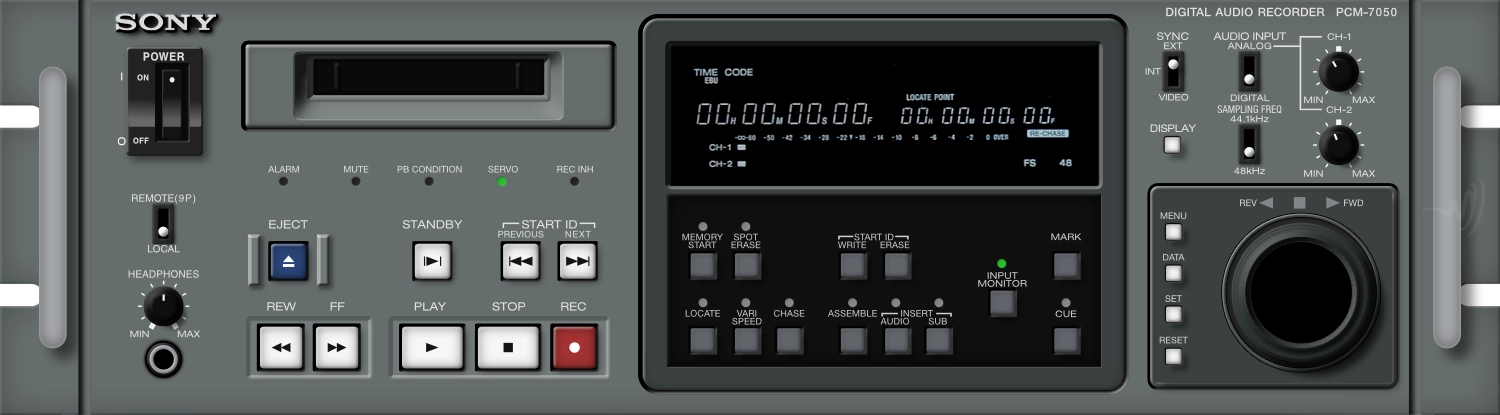
Sony PCM-7050 DAT Recorder
Introduced in 1996, the Sony PCM-7050 was one of Sony’s finest DAT recorders. With it’s precise electronic editing, video/audio editor interface and many postproduction and on-air facilities, it found applications in many areas of professional audio – from simple recording/playback to audio-follow-video editing, as a program source in CD mastering, for program transmission and in multi-recorder sound effects libraries.
Tascam DA-45HR DAT Recorder
The Tascam DA-45HR was the world’s first digital audio tape (DAT) recorder that supports 24-bit recording. It boasts the ability to capture high-resolution data and record it onto the standard DAT tape, thereby providing an affordable and straightforward option for professional-quality 24-bit recording. The Tascam DA-45HR was not limited to only 24-bit recording. It could also operate as a standard 16-bit DAT recorder, allowing for the reading and writing of DATs created on typical DAT machines.

Nakamichi 1000 DAT Recorder

Care and Handling of DAT Tapes
Digital Audio Tape is now firmly a legacy format, but for those still working with DAT today, careful handling remains essential if reliable playback and preservation are to be maintained. While DAT was originally designed as a professional medium, its compact cassette format can give a false sense of durability. Modern users should approach DAT with the mindset of archival preservation rather than everyday convenience. The tapes themselves were engineered with high-density metal particle formulations and protective coatings, making them more resistant to signal loss than analogue tape.
However, this does not make them immune to environmental damage. Exposure to heat, cold, moisture, dust, or magnetic fields can still degrade performance or introduce playback errors. Storage should therefore be stable, dry, and away from direct sunlight or electrical equipment that may generate interference. Mechanical stress is another key consideration. Although DAT tape was designed to withstand repeated passes, prolonged tension inside a machine can cause the tape to deform or jam. It remains good practice to remove cassettes promptly after use and avoid leaving them loaded in a transport for extended periods. Given the age of most surviving DAT decks, transport mechanisms themselves may now be more of a risk than the tape.
Dust remains one of the most significant threats to reliable DAT playback. The format relies on a high-speed rotating head drum, and even minor contamination can lead to dropouts or complete signal loss. The cassette shell helps protect the tape, but users should avoid opening the protective slider and ensure machines are kept clean. When maintenance is required, only appropriate wet-type cleaning cassettes should be used, as dry systems can damage the delicate head assembly.
Static electricity is another often overlooked issue. DAT transports thread tape through a complex path, and static buildup can cause the tape to stick or misalign. Using anti-static storage materials, keeping equipment properly grounded, and avoiding contact with static-generating surfaces will help minimise this risk.
For those archiving or transferring DAT recordings today, the priority should always be preservation. DAT tapes may still be capable of excellent digital playback, but both the media and the machines are ageing. Careful handling, controlled storage, and minimal unnecessary use will ensure that this once cutting-edge format can continue to deliver its original recordings for as long as possible.
The DAT format which had proved a little fragile over the years, was eventually replaced by more reliable formats such as CD Recorders, and later Magento Optical recorders. Sony concluded its production of DAT products with the release of the DAT Walkman TCD-D100 in 1995 (a consumer model), maintaining production until November 2005 when the remaining DAT machine models were slated for discontinuation the following month. With an estimated 660,000 DAT products sold since its introduction in 1987, Sony sustained the production of blank DAT tapes until 2015, announcing their cessation by year-end, thus, ending the DAT era.
2 Responses
Where can a Sony TCD D8 be repaired, thanks
[email protected]
Try our repairers directory: https://www.vintagedigital.com.au/repairers-directory/