Analogue Tape Recorders

Analogue Tape Recorders covers professional and semi-professional recording machines that capture audio magnetically onto tape, including reel to reel recorders, cassette tape recorders, multitrack cassette machines, and related analogue formats. These recorders formed the backbone of music production, broadcast, mastering, and home recording for decades, ranging from compact cassette-based systems to large-format multitrack studio machines. This category focuses on tape-based analogue recording technology, including transport design, tape formats, track configurations, noise reduction systems, synchronisation features, and the machines that shaped recording practice before the widespread adoption of digital recording.

Decades
Made In Japan
Released in 1974 /
The TEAC A-3340S was a 4-channel Simul-Sync reel-to-reel tape deck that brought overdubbing, multitrack arrangement, 267mm reel support, touch-button transport control, and semi-professional recording flexibility into a compact 1970s tape recording system.
Made In Japan
Released in 1975 /
The Nakamichi 600 Stereo Cassette Console was a high-performance two-head cassette deck with a focused-field crystal permalloy head, Dolby noise reduction, I.M. Suppressor circuitry, phase correction, front-panel calibration, peak-reading meters and a stable DC servo transport. It established the 600-series console format that Nakamichi later refined in the Nakamichi 600 II.
Made In U.S.A.
Released in 1976 /
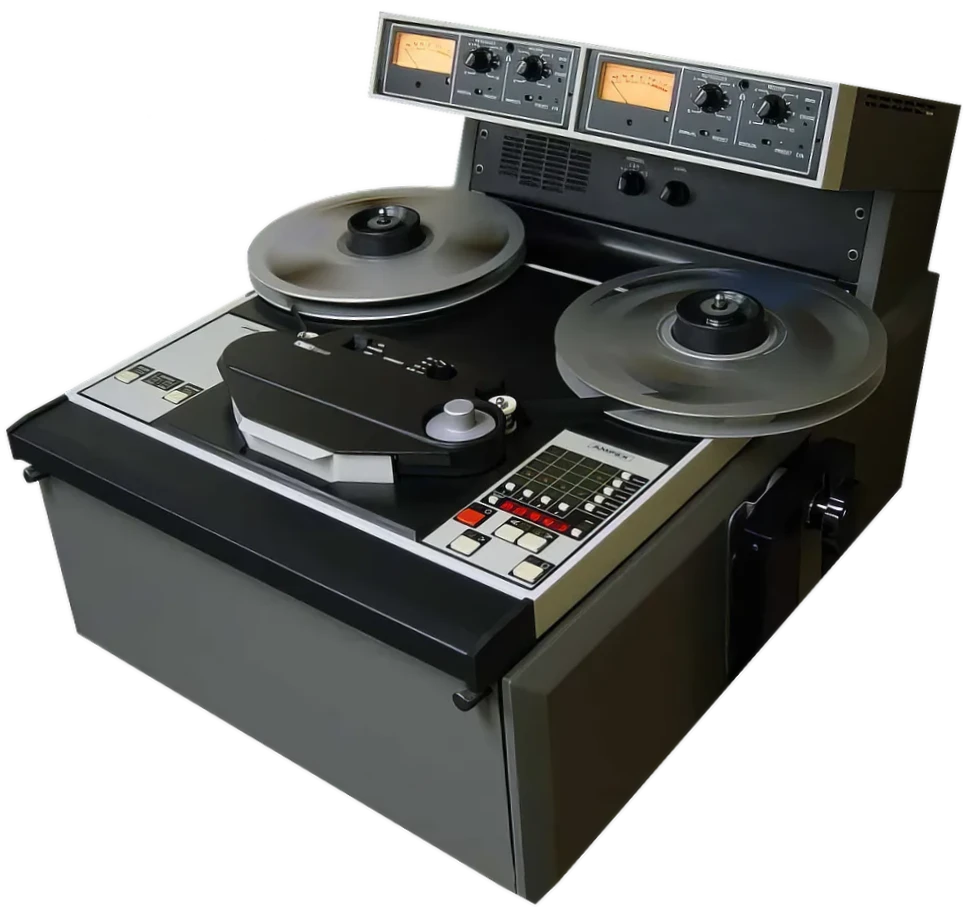
In the world of two track analogue mastering audio recorders, the Ampex ATR-100 Series recorders are regarded as the finest reel to reel audio mastering recorders ever made. The fact that they are still in use today, more than forty years later is surely testament to that.
Made In Japan
Released in 1976 /
The TEAC A-860 was a 1976 three-head cassette recorder with a three-motor dual-capstan transport, four-channel microphone and line mixer, adjustable bias and equalisation, Dolby B and dbx Type II noise reduction, switchable VU and peak metering, memory transport functions and extensive recording controls.
Made In Japan
Released in 1976 /
Introduced in 1976, the Sony EL-5 was a two-head stereo Elcaset recorder featuring logic-controlled feather-touch operation, an FG servo motor, a solid-core ferrite recording and playback head, Dolby noise reduction, independent bias and equalisation selection, microphone and line mixing, memory operation and timer compatibility.
Made In Japan
Released in 1976 /
Introduced in 1976, the Technics RS-9900US was a two-piece cassette recording system combining a three-motor, closed-loop double-capstan transport with a separate record/reproduce amplifier. Its three-head configuration, adjustable azimuth, extensive tape calibration controls, pitch adjustment, peak meters and professional-style construction made it one of Technics’ most advanced cassette systems.
Made In Japan
Released in 1976 /
The TEAC A-2300SX is a 4-track, 2-channel reel-to-reel recorder from the mid-1970s, designed for home and semi-pro use. It features a three-motor transport, three-head design, and supports 7-inch reels at two speeds. With solid build quality and a frequency response up to 28 kHz, it remains a reliable and respected machine.
Released in 1976 /
Released in 1976, the Technics RS-1500 was a three-speed, two-track open-reel recorder with four-track playback, a quartz-locked three-motor direct-drive transport and Technics’ distinctive Isolated Loop tape path. Its professional recording electronics, plug-in head assembly, editing controls, real-time counter and optional portable power system made it suitable for both fixed and location recording.
Made In Japan
Released in 1976 /
Introduced in 1976, the Akai GXC-730D was an automatic reverse stereo cassette deck featuring bidirectional recording and playback, a GX record and playback head, two erase heads, solenoid transport control, Dolby noise reduction and selectable one-way, one-cycle and continuous operation.
Made In Norway
Released in 1976 /
The Tandberg TCD 330 was a three-head stereo cassette deck introduced in 1976 with separate recording and playback heads, off-tape monitoring, a dual-capstan transport, Dolby B noise reduction, adjustable recording-head azimuth, normal and chromium dioxide tape selection, microphone inputs and optional remote control.
Made In Japan
Released in 1976 /
Introduced in 1976, the Marantz 5220 was a front-loading stereo cassette deck with Dolby noise reduction, Dolby FM decoding, three ferrite heads, illuminated VU meters, peak indicators, independent microphone and line controls, tape-type selection, memory rewind and total transport shut-off.
Made In Japan
Released in 1976 /
The JVC CD-S200 was a visually distinctive stereo cassette deck manufactured from 1976 to 1977. It was not an especially high-end model, but its vertical open-view cassette loading system, blue VU meters, silver and black styling, ANRS noise reduction and matching JVC system appearance made it one of the more memorable cassette decks in JVC’s late 1970s range.