Reel to Reel Recorders

Reel to reel tape recorders defined professional studio recording from the late 1940s onwards. Beginning with pioneering machines such as the Ampex Model 200 in 1948, magnetic tape transformed the way music and broadcast audio were captured, edited and mastered. These analogue systems introduced higher fidelity, extended recording times and the ability to splice and overdub, reshaping studio workflows permanently.

Through the 1950s, 1960s and 1970s, manufacturers including Studer, Ampex, Otari and TASCAM developed increasingly advanced mono, stereo and multitrack tape machines. From two track mastering decks to sixteen and twenty four track studio recorders, reel to reel technology became the backbone of professional recording. Today, these classic analogue machines remain central to archival restoration, analogue mastering and heritage production environments.

Decades
Made In U.S.A.
Released in 1948 /
The Ampex Model 200, introduced in 1948, was the first professional reel-to-reel recorder to achieve broadcast-quality performance. With precision tube electronics, a full-track design, and remarkable stability, it transformed radio and studio recording and established Ampex as the industry’s leading innovator.
Made In U.S.A.
Released in 1949 /
The Ampex 300, released in 1949, set the benchmark for professional recording and mastering. With its precision mechanics, low distortion, and advanced “Sel-Sync” option, it became the dominant studio recorder of the 1950s and early 1960s, renowned for its reliability and pristine sound quality.
Made In U.S.A.
Released in 1953 /
Introduced in 1953, the Ampex 350 Tape Recorder was a professional two-speed ¼-inch recorder offering excellent fidelity and modular design. It became a studio and broadcast standard, admired for its build quality, reliability, and smooth tape transport, helping establish Ampex as the leader in professional audio recording.
Made In Switzerland
Released in 1964 /
The Studer J 37 Tape Recorder is a legendary piece of audio equipment that has etched its name in music history. Renowned for its exceptional sound quality and reliability, the J 37 was the tape recorder of choice at the iconic Abbey Road Studios. This masterpiece of engineering played a pivotal role in recording some of the most celebrated albums in history, including The Beatles’ groundbreaking work.
Made In U.S.A.
Released in 1966 /
The 3M M-23 Series was a modular professional tape recording system built around a high stability Isoloop transport and a versatile electronics platform that supported NAB or Dynatrack operation. It delivered improved dynamic range, reduced flutter, and reliable long term performance through fully solid state construction. The 8-track configuration represented the system at full capacity, offering a flexible and expandable solution for multitrack recording. Its combination of advanced tape transport engineering and innovative electronic design made it a significant machine in the evolution of professional multitrack recorders.
Made In Germany
Released in 1967 /
The Revox A77 was a landmark open-reel recorder introduced in 1967, featuring a three-motor transport, electronically regulated capstan motor, plug-in amplifier modules, and REVODUR heads. It offered exceptional reliability, long tape life, and studio-grade sound, setting the standard for semi-professional tape machines worldwide.
Made In U.S.A.
Released in 1969 /
The 3M M56 Tape Recorder introduced a compact sixteen-track, two-inch recording system with integrated electronics, advanced transport design, and remote operation, establishing a new standard for multitrack recording in professional studios.
Made In Switzerland
Released in 1970 /
The Studer A80 series is a modular professional tape recorder family spanning mono, stereo, and multitrack models, built on a rigid die-cast chassis with logic-controlled transport, servo capstan, electronic tension control, and plug-in amplifier cards. Interchangeable headblocks, selectable NAB or CCIR equalisation, precise bias and erase systems, and comprehensive local or remote control made the A80 a service-friendly studio standard across its original and later VU Mk II and Mk III versions.
Made In U.S.A.
Released in 1971 /
The MCI JH-16 Multitrack Recorder combined advanced transport control, excellent service access, a flexible remote system, and a thoughtfully engineered console design. Its construction and layout were intended to minimise downtime while maximising operational ease, making it a robust and highly capable studio recorder of its era.
Made In U.S.A.
Released in 1973 /
The 3M 79 Series Multitrack Recorders set a professional benchmark with IsoLoop capstan control, modular electronics, wide format flexibility, and reliable transport. Built for performance and serviceability, they remain a respected part of multitrack recording history.
Made In Japan
Released in 1974 /
The TEAC A-3340S was a 4-channel Simul-Sync reel-to-reel tape deck that brought overdubbing, multitrack arrangement, 267mm reel support, touch-button transport control, and semi-professional recording flexibility into a compact 1970s tape recording system.
Made In U.S.A.
Released in 1976 /
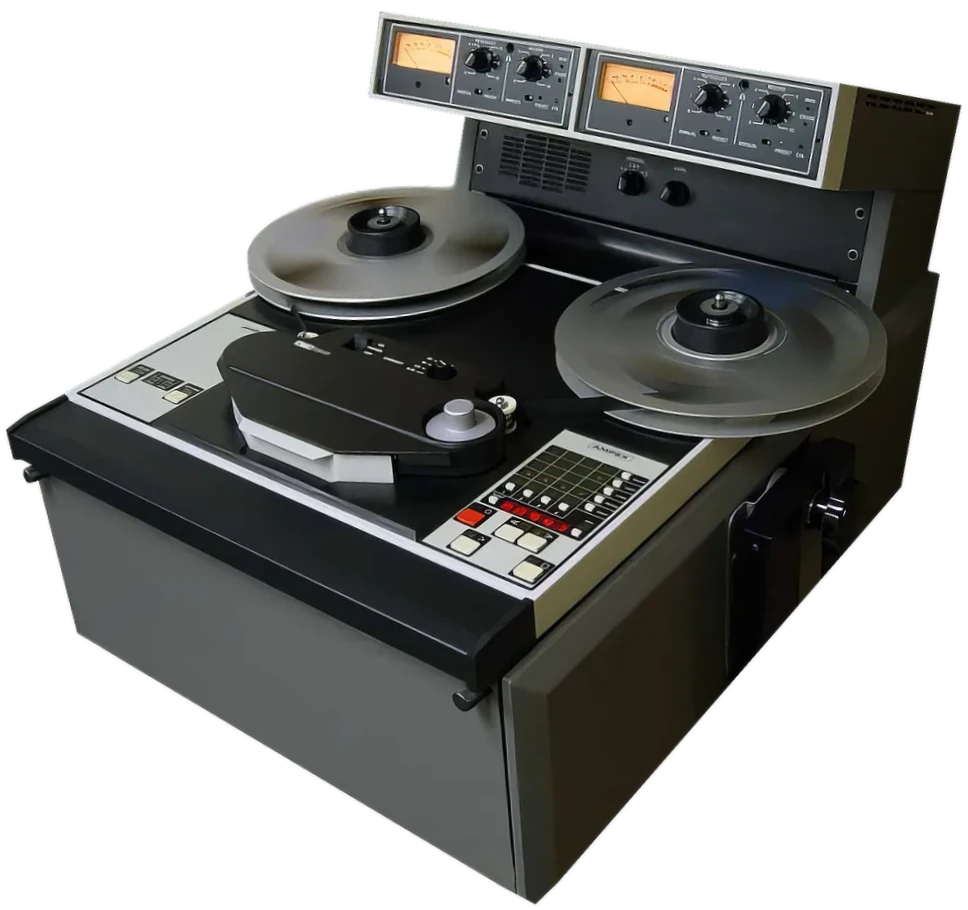
In the world of two track analogue mastering audio recorders, the Ampex ATR-100 Series recorders are regarded as the finest reel to reel audio mastering recorders ever made. The fact that they are still in use today, more than forty years later is surely testament to that.