
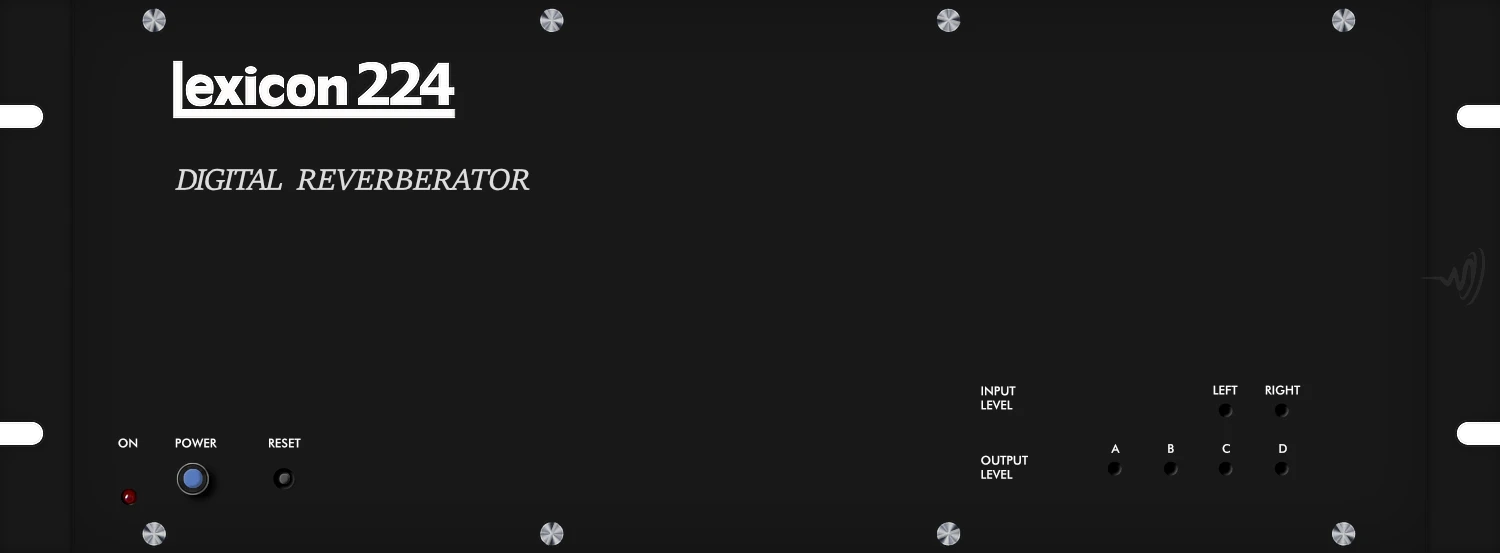
Introduced at the 1978 AES Convention, the Lexicon 224 marked a decisive moment in the development of digital reverberation. Although the EMT 250 had already established the concept of a digital reverb system, it was the Lexicon 224, followed by the Lexicon 224X and Lexicon 224XL, that became the dominant high-end studio reverb of its era.
The Lexicon 224 quickly earned a reputation for its expansive ambience and exceptionally long decay times. Its ability to generate vast, atmospheric spaces made it particularly attractive to producers and engineers seeking a more cinematic dimension in their mixes. Among the early adopters exploring extended decay settings was Vangelis, who incorporated the Lexicon 224 into the soundtrack for Blade Runner, using its reverb textures to help define the film’s futuristic sound world.
The origins of the Lexicon 224 lie with Dr David Griesinger, a nuclear physicist, musician and classical recording engineer who had been experimenting with digital reverberation techniques. Inspired by the arrival of the EMT 250, he combined his reverb concepts with microcomputer control and presented a prototype to Lexicon. The company acquired the design and brought Griesinger into the development process, leading to the finished Lexicon 224 system.
 A defining feature of the Lexicon 224 was its two-part architecture. Processing was housed in a four rack-space mainframe, while control was handled via a dedicated console-top remote. This approach separated audio electronics from user interaction, allowing direct access to programs and parameters. The system provided two inputs, four outputs, and interchangeable program cartridges designed to emulate acoustic chambers, plates and rooms.
Priced at US$7,500 with two programs or US$7,900 with four programs, the Lexicon 224 was positioned as comparatively accessible within the professional market. In contrast, the EMT 250 carried roughly double the price, helping the Lexicon 224 gain traction in major studios.
Subsequent revisions refined the platform. The Lexicon 224X increased the sampling rate to 34.5kHz from the original 20kHz specification. The Lexicon 224XL introduced the LARC, the Lexicon Alphanumeric Remote Control, which provided a 24-character LED display, dedicated function keys and more immediate parameter access.
Internally, the Lexicon 224 was built around a fixed-point processing architecture with a 16-bit word size. Its late 1970s design incorporated an Intel 8080 microprocessor, 12-bit converters including the DAC80 integrated circuit, input transformers and extensive 74S and 74LS series logic components. Although the converters operated at 12-bit resolution, Lexicon implemented an input scaling system that shifted gain to provide an additional 24dB of headroom. This technique extended the usable dynamic range to the equivalent of 16 bits, while true precision remained 12-bit.
Throughout the 1980s, the Lexicon 224 became a staple in leading studios. Talking Heads’ Remain in Light, released in 1980, was recorded at Compass Point Studios in the Bahamas, where Brian Eno had installed a Lexicon 224. The processor contributed to the record’s spacious and layered production style. U2’s The Unforgettable Fire, produced by Brian Eno and Daniel Lanois and released in 1984, also made prominent use of the Lexicon 224, particularly on Pride (In the Name of Love) and the album’s title track. Pink Floyd’s The Final Cut, issued in 1983 and recorded at Britannia Row Studios, featured the Lexicon 224 under the guidance of engineer Andy Jackson. Further notable albums associated with the unit include Peter Gabriel’s So, Kate Bush’s Hounds of Love and Rush’s Power Windows, all released during the mid-1980s.
Today, original Lexicon 224, Lexicon 224X and Lexicon 224XL systems remain in demand among collectors and studios. Market values vary according to condition and configuration, with examples commonly trading between US$5,000 and US$10,000, and later variants often commanding higher figures due to their enhanced specifications. However, the Lexicon 224 platform is complex and ageing. Maintenance requires specialist expertise, and servicing costs can be significant, factors that prospective owners must consider alongside its historical importance.






One Response
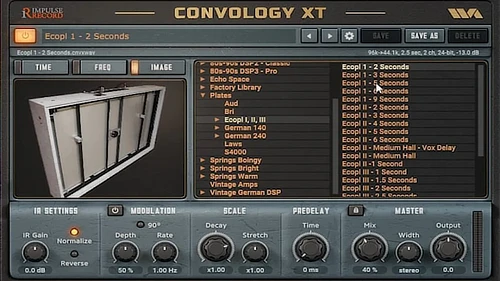
Awesome!!! Didn’t know the 224 was available as plugin! Must Have!