Studio Legends
Studio Legend identifies the small group of products that fundamentally shaped the sound of recorded music and remain enduring benchmarks. These are the units engineers still reference by name, decades after release. Products in this group changed practice across professional studios, influenced countless records, and continue to be sought after for their sound, workflow or engineering. If a single product can stand as a shorthand for its category, it belongs here.
1948
Reel to Reel Recorders
/ Made In U.S.A.
The Ampex Model 200, introduced in 1948, was the first professional reel-to-reel recorder to achieve broadcast-quality performance. With precision tube electronics, a full-track design, and remarkable stability, it transformed radio and studio recording and established Ampex as the industry’s leading innovator.
1955
Equalisers
Made In U.S.A. /
The Pultec MEQ-5 provides fine control over the "power region" (300 Hz to 5000 Hz), where most audio energy is focused and the ear is highly sensitive. Smooth handling of this range is crucial, as minor acoustic or equipment resonances can greatly affect sound clarity and listenability.
1957
Analogue Reverb
/ Made In Germany
The EMT 140, introduced in 1957, was the world’s first artificial reverb unit and revolutionised recording by providing “reverb on tap.” Using a suspended metal plate, it delivered rich, natural reverberation, allowing even smaller studios without reverb chambers to create professional-quality ambience. Its warm, versatile sound quickly made it a studio essential.
1960
Compressors & Limiters
Made In U.S.A. /
The Fairchild 670 Tube Limiter was the brainchild of Estonian immigrant to the USA, Rein Narma. Rein licensed the design to Sherman Fairchild and the rest as they say, is history...a legend was born.
1961
Equalisers
/ Made In U.S.A.
The Pultec EQP-1A is a classic equaliser known for its warm, smooth sound, achieved through a unique design that allows simultaneous frequency boosting and cutting. Introduced in 1961, its tube-driven, passive circuitry adds depth and clarity, making it a favourite for enhancing bass and airy highs. Its "Pultec sound" remains a staple in studios for its natural, musical character.
1962
Compressors & Limiters
Made In U.S.A. /
The Teletronix LA-2A was released in 1962, and along with the Urie 1176, is one of the most iconic compressors ever made, and is still in use today. With Universal Audio having purchased the Teletronix company way back in the mid 1960s, this iconic compressor is available new, made to the exacting specifications.
1964
Reel to Reel Recorders
/ Made In Switzerland
The Studer J 37 Tape Recorder is a legendary piece of audio equipment that has etched its name in music history. Renowned for its exceptional sound quality and reliability, the J 37 was the tape recorder of choice at the iconic Abbey Road Studios. This masterpiece of engineering played a pivotal role in recording some of the most celebrated albums in history, including The Beatles' groundbreaking work.
1967
Compressors & Limiters
Made In U.S.A. /
There are not a lot of limiters designed in the 1960s that are still in production today, but the legendary Urei 1176 is one such beast. While the name Urei has long since vanished from the pro audio world, this limiter can still be purchased brand new from Universal Audio.
1969
Compressors & Limiters
/ Made In U.S.A.
If you took the gentle optical compression of the Teletronix LA‑2A and fused it with the solid‑state punch and clarity of the Urie 1176, you would have the Teletronix LA-3A. It has become a secret weapon compressor for many engineers, with a unique character capable of moving sounds right to the front of your mix.
1976
Digital Reverbs
Made In Germany /
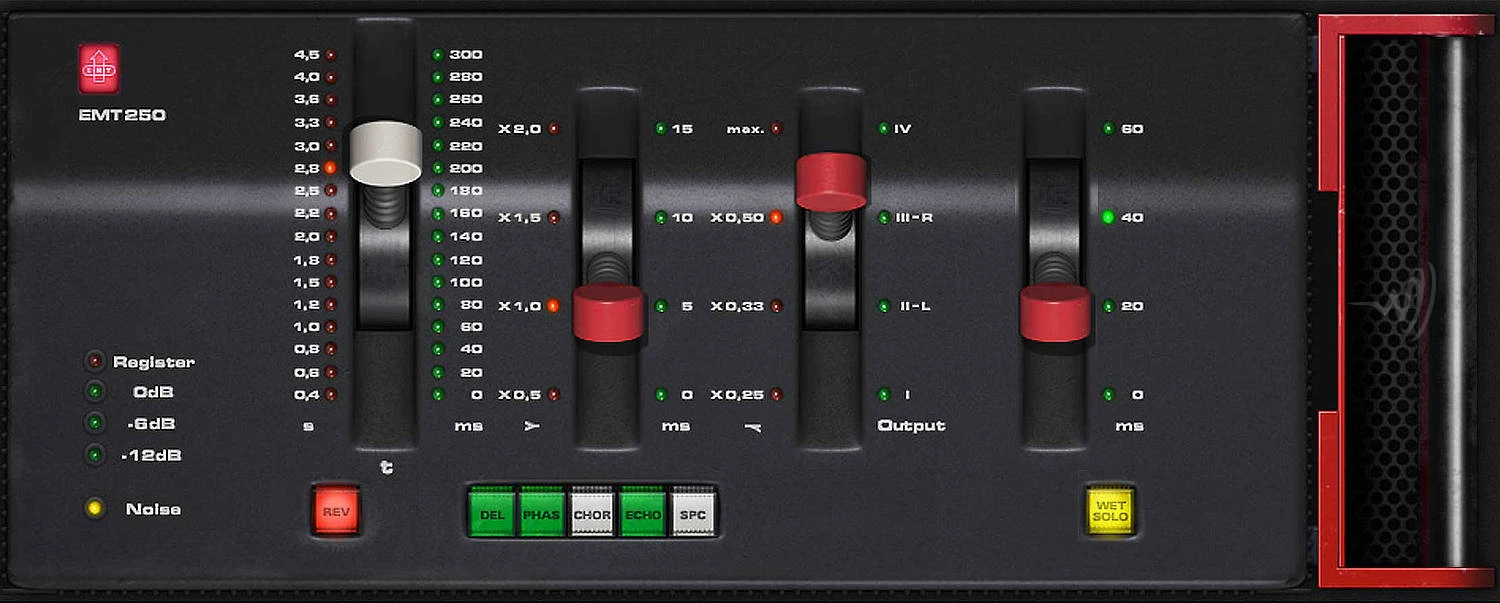
The EMT 250 Digital Reverb is completely electronic, with no moving parts: ruggedly built and insensitive to shock or vibrations...and a studio legend! Extremely versatile with many programming possibilities and adjustment of parameters. The EMT 250 Digital Reverb uses high-value digital words (12 bit, quasi 15 bit) to virtually eliminate intrinsic and quantising noise.
Think we have missed one that clearly meets the criteria above? Send a correction with sources and we will review.