
Bit Depth in Vintage Digital Reverbs Explained
/17 February 2026
What Bit Depth Actually Means
A bit is a binary digit. In digital audio, each sample of the analogue waveform is converted into a numerical value. That value is stored using a fixed number of binary digits. The number of bits available determines how many discrete amplitude levels can be represented.
The total number of possible amplitude steps is calculated as 2 to the power of the bit depth.
• 12-bit audio allows 4,096 possible amplitude values
• 16-bit audio allows 65,536 values
• 20-bit audio allows 1,048,576 values
More available steps mean finer resolution between quiet and loud signals.
When an analogue signal is converted to digital, the continuous waveform is rounded to the nearest available digital step. The difference between the actual analogue value and the stored digital value is called quantisation error. This error manifests as quantisation noise.
The lower the bit depth, the larger each step between values. Larger steps increase quantisation error and raise the effective noise floor.
In practical terms:
• 12-bit systems have a noticeably higher noise floor
• 16-bit systems significantly reduce quantisation noise
• 20-bit systems lower the noise floor further and preserve low-level detail
The theoretical dynamic range of a digital system can be approximated by multiplying bit depth by roughly 6 dB.
- 12-bit offers around 72 dB
- 16-bit offers around 96 dB
- 20-bit offers around 120 dB
Dynamic range defines the difference between the loudest possible undistorted signal and the noise floor. In a reverb processor, this directly affects how smoothly a decay tail fades into silence.
With lower bit depth:
- Reverb tails may become grainy as they decay
- Low-level ambience can sound stepped or textured
- Noise becomes audible sooner in long decays
With higher bit depth:
- Decays fade more smoothly
- Low-level reflections retain detail
- The background noise floor is lower
It is important to note that theoretical dynamic range and real-world performance are not always identical. Analogue circuitry, converter design, filtering, and gain staging also influence noise performance. However, bit depth sets the fundamental limit on digital amplitude resolution.
In vintage digital reverbs, this limit becomes part of the sonic identity. The behaviour of the decay tail at very low levels is often where different generations of processors reveal their character most clearly.

12-Bit Reverbs
Early digital reverbs often operated at 12-bit resolution. Memory and processing power were expensive in the late 1970s and early 1980s, so designers worked within strict technical limitations. Lower bit depth results in higher quantisation noise and reduced dynamic range. In practical terms, this can produce:
Grain in the reverb tail | Slight modulation artefacts | Audible texture at low levels
However, these limitations are also part of the character. Many engineers value early 12-bit units precisely because they do not sound pristine. The tail often has a density and texture that sits well in dense mixes, particularly in 1980s productions.
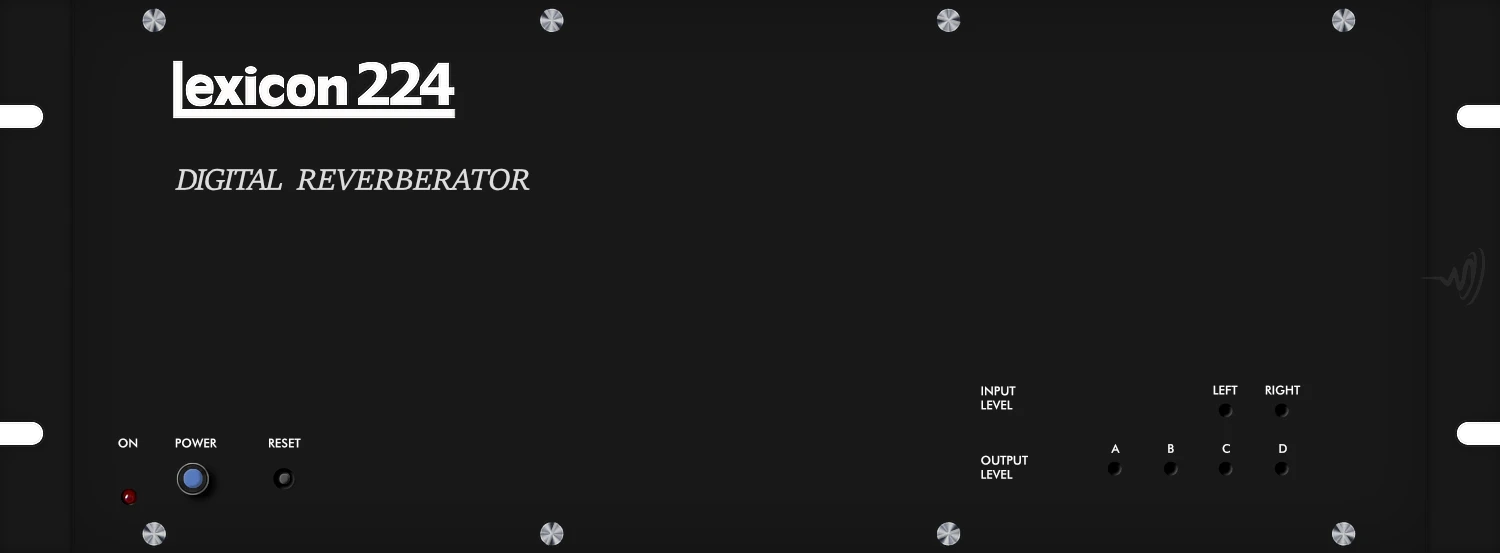
Two of the greatest and most revered digital reverbs ever produced are both 12-bit designs: the Lexicon 224 and the EMT 250.
16-Bit Reverbs
By the mid to late 1980s, 16-bit processing became more common. This provided a significant jump in theoretical dynamic range and cleaner low-level resolution.
In practice, 16-bit reverbs offer:
Smoother decay tails | Lower background noise | Greater clarity in complex algorithms | Improved stereo imaging
This era marked a turning point where digital reverbs began to feel less experimental and more refined. Many classic rack units from this period strike a balance between clarity and character.

18-Bit And 20-Bit Processing
As DSP technology advanced, some manufacturers moved to 18-bit or 20-bit internal processing. This further reduced quantisation distortion and improved the behaviour of low-level reverb tails.
Higher internal resolution allows:
More detailed early reflections | Smoother long decays | Greater headroom within algorithms | More stable modulation structures
In high-end studio environments, this refinement contributed to the dense, smooth halls and plates associated with premium digital processors of the late 1980s and 1990s.

Internal Processing Vs Converters
Technically, higher bit depth provides greater dynamic range and lower quantisation noise. However, in musical terms, it does not automatically mean better.
Lower resolution units can:
- Add density to sparse arrangements
- Sit behind vocals more naturally
- Contribute a recognisable era-specific texture
Higher resolution units typically deliver:
- Greater transparency
- Longer usable decay times
- Improved clarity in modern productions
The choice depends on context. For some mixes, the slight grain of a lower resolution processor is desirable. For others, smooth extended tails are essential.
Bit Depth Vs Sample Rate
Bit depth and sample rate are often confused. Bit depth determines amplitude resolution and dynamic range. Sample rate determines how frequently the signal is sampled per second and influences frequency bandwidth.
A unit may operate at a modest sample rate but still benefit from higher bit depth in terms of noise floor and tail smoothness. Both factors contribute to overall performance, but they affect different aspects of the sound.
Practical Studio Considerations
When integrating a vintage digital reverb into a modern hybrid setup, bit depth interacts with gain staging and noise management.
Lower resolution units may exhibit:
- Higher noise floors
- More audible artefacts at very low send levels
Careful gain staging and appropriate return levels can ensure the character is retained without emphasising unwanted noise.
In parallel send configurations, the texture of a lower bit depth unit can add depth without dominating the mix. In contrast, higher bit depth processors are often better suited to long, exposed halls and cinematic decays.
Why Bit Depth Still Matters
For a broader look at selecting the right unit for your setup, see our guide to choosing a vintage reverb for your studio, where bit depth is considered alongside architecture, workflow, and musical application.