Sony

Sony became a dominant force in professional audio with its pioneering digital recorders and studio effects. DASH machines like the PCM-3324 and PCM-3348 were studio staples in the 1980s and 90s, known for their superb sound and reliability. Sony also led in digital effects, with the DRE-2000 and DPS series offering versatile tools for reverb, delay, and modulation. Innovations like the PCM-1630 for CD mastering and DSD-based recorders for high-resolution audio further showcased Sony’s engineering. Highlights such as the DPS-V77 and DRE-S777 solidified their legacy, helping define the sound of an era.

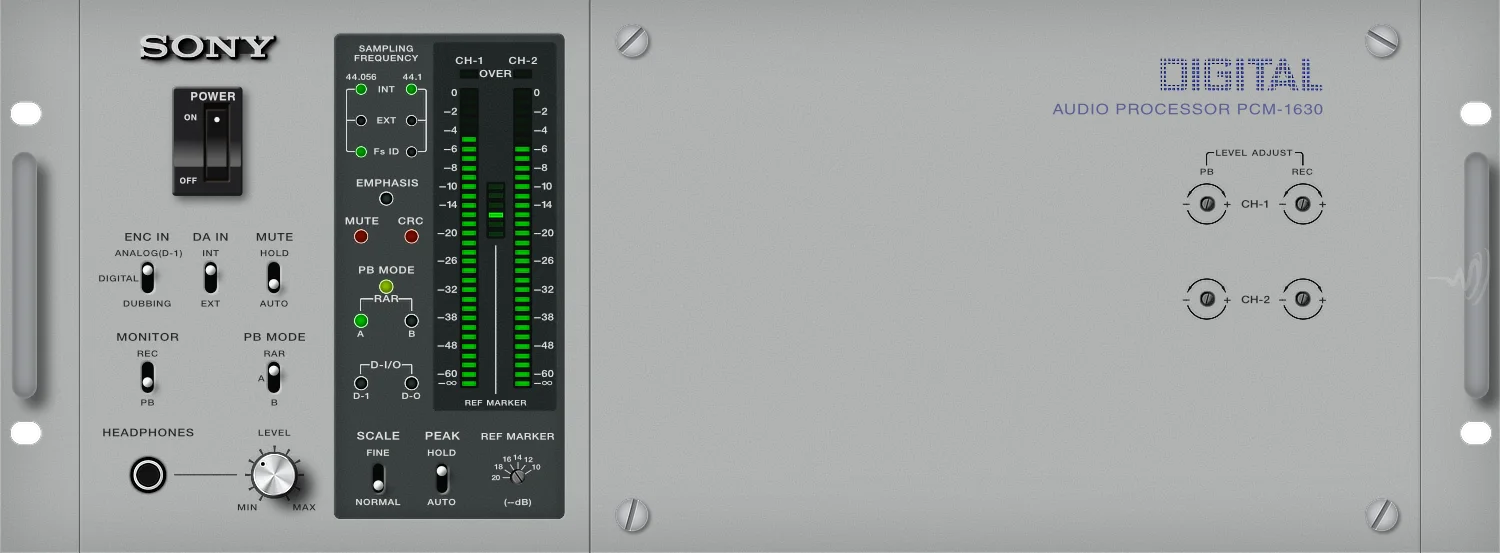
Sony PCM-1630
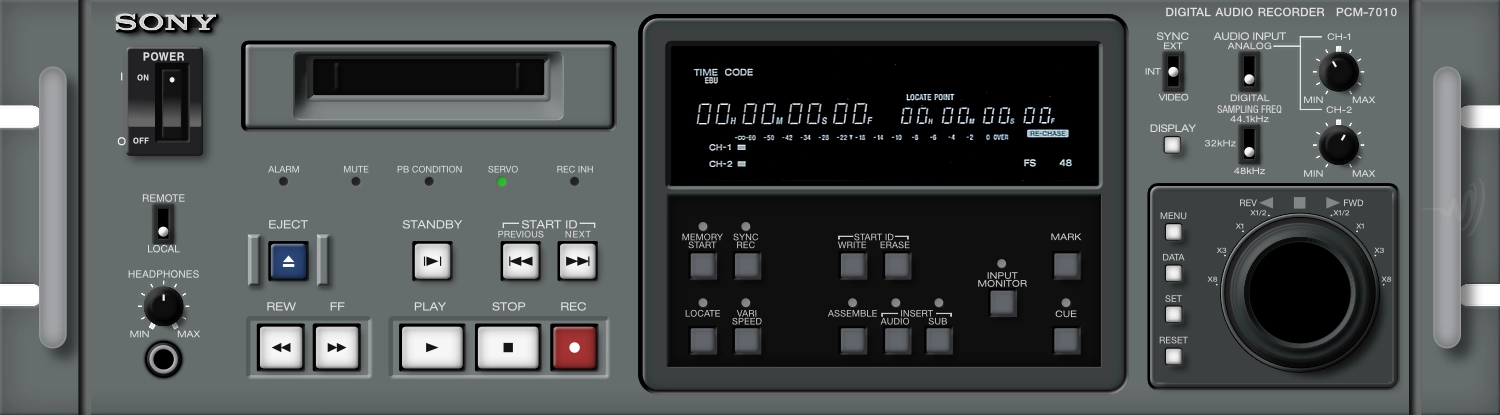
Sony PCM-7010
Decades
Made In Japan
Released in 1976 /
Introduced in 1976, the Sony EL-5 was a two-head stereo Elcaset recorder featuring logic-controlled feather-touch operation, an FG servo motor, a solid-core ferrite recording and playback head, Dolby noise reduction, independent bias and equalisation selection, microphone and line mixing, memory operation and timer compatibility.
Made In Japan
Released in 1977 /
The Sony TC-766-2 was a semi-professional 2-track stereo reel to reel recorder with 4-track playback, four heads, three motors, closed-loop dual-capstan drive, 267mm reel support, 381mm/s and 190mm/s tape speeds, separate source and tape monitoring, and flexible recording functions.
Made In Japan
Released in 1977 /
The Sony PCM-1, launched in September 1977, was Sony’s first consumer PCM processor, setting the standard for digital audio devices despite its high price of 480,000 yen and limited sales of around 300 units worldwide.
Explore the full Series
Made In Japan
Released in 1978 /
The Sony TC-K96R is a stereo cassette deck with auto-reverse operation, a two-head mechanism, Dolby B noise reduction, a removable wired remote-control transport section and large dual VU meters with peak level indication. It was made in Japan and produced from 1978 to 1980, with support for Type I, CrO2 and FeCr tape formulations.
Made In Japan
Released in 1978 /
A more accessible alternative to the flagship EL-7, the Sony EL-4 brought the core benefits of the Elcaset format to a simpler domestic recorder. With wider tape, 9.5 cm/s tape speed, Dolby noise reduction, automatic tape-type switching, logic-controlled transport, ferrite-and-ferrite heads and large illuminated VU meters, it offered a serious step beyond standard compact cassette performance while remaining straightforward to use.
Made In Japan
Released in 1978 /
The Sony PCM-1600 was the first commercially available professional 16-bit digital audio processor for two channel mastering with the first machines delivered in April of 1978.
Explore the full Series
Made In Japan
Released in 1978 /
The Sony EL-7 was a three-head ELCASET recorder featuring a three-motor closed-loop dual-capstan transport, ferrite heads, logic-controlled operation, Dolby noise reduction, source and tape monitoring, microphone and line mixing, memory functions and optional remote control.
Made In Japan
Released in 1980 /
The Sony TC-K81 was a three-head cassette deck featuring independently mounted Sendust and ferrite heads, a two-motor closed-loop dual-capstan transport, manual bias and recording-level calibration, Dolby noise reduction, microprocessor control and 16-segment LED peak metering.
Made In Japan
Released in 1980 /
The Sony PCM-10 Digital Audio Processor is a rather elusive piece of audio technology with very little information available.
Explore the full Series
Made In Japan
Released in 1980 /
The Sony PCM-100 Digital Audio Converter is a rather elusive piece of audio technology.
Explore the full Series
Made In Japan
Released in 1981 /
The genuine advantage of the Sony PCM-1610 digital audio processor is its enormous potential to deliver drastically improved sound. Whereas analogue recorders are saddled with performance limitations of one form or another, unlimited quality improvement is possible using digital technology.
Explore the full Series
Made In Japan
Released in 1981 /
The Sony DRE 2000 was Sony’s first digital reverb and they headed straight for the heart of Lexicon with a complex and very advanced system, that also proved fragile. These reverbs are hard to find on the used market, partly because those who have them hang onto them, and partly because many of them have died, proving to be too expensive and difficult to fix.
Explore the full Series

Classic Tracks Using Sony Gear

Click for deep dives into iconic songs, the gear, engineers, and studios behind the recordings