
26 February 2026
The Most Important Digital Studio Formats of the 1980s and 1990s
From DASH and DAT to ADAT and DTRS, the digital formats that reshaped professional recording
The Early Professional Digital Multitrack Era
The first serious move toward fully digital multitrack recording in major studios began in the late 1970s with large-format systems developed for the highest end of the industry.
The first serious move toward fully digital recording in major studios began in the late 1970s and gathered pace throughout the 1980s. These systems were not designed for small facilities or independent producers. They were large, expensive and aimed squarely at the very best commercial studios working with major labels.
Among the most significant of these early formats was Sony’s DASH system, a fixed-head digital multitrack platform capable of 24-track recording on 1/2-inch and later 1-inch tape. Competing systems from Mitsubishi, including the X-800 and X-850 series, offered similar capabilities and were adopted by high-profile studios seeking the perceived clarity and consistency of digital recording without abandoning large-format consoles and established workflows.
These machines were physically imposing and financially out of reach for most facilities, but they marked a decisive shift in professional recording. For the first time, entire multitrack sessions could be captured digitally rather than transferred from analogue at the mastering stage.
The appeal was clear: lower noise floors, no tape hiss build-up across overdubs, and stable playback unaffected by minor mechanical variations. At the same time, the limitations were equally apparent. Editing was complex, machines were expensive to maintain, and the sound character of early digital converters divided opinion. Despite these challenges, DASH and its contemporaries established digital multitrack recording as a serious alternative to analogue tape in the world’s leading studios.

The Otari DTR-900 32-Track Digital Recorder was compatible with the PD (Professional Digital) format developed with Mitsubishi.
Digital Two-Track Mastering and the Rise of PCM Recorders
While large-format digital multitrack machines were reshaping high-end studio tracking, digital two-track systems were transforming the mastering stage. In the late 1970s and early 1980s, PCM-based digital processors paired with U-matic video recorders became a practical way to capture stereo masters digitally.
These systems encoded audio as digital data and stored it on videotape, providing a stable and repeatable alternative to analogue master tapes. For many facilities, this became the first meaningful step into digital recording, even if multitrack sessions were still being tracked to analogue tape.
The significance of digital two-track recording cannot be overstated. It allowed engineers to preserve final mixes without the cumulative noise and generational loss associated with analogue duplication. It also laid the groundwork for the Compact Disc, which would arrive commercially in the early 1980s and accelerate the industry’s move toward digital delivery.
As labels embraced the promise of cleaner masters and consistent reproduction, digital stereo recording became increasingly common in mastering rooms, even in studios that continued to rely on analogue multitrack machines. This hybrid period, where analogue tracking met digital mastering, defined much of the early digital era and set the stage for the format competition that followed.

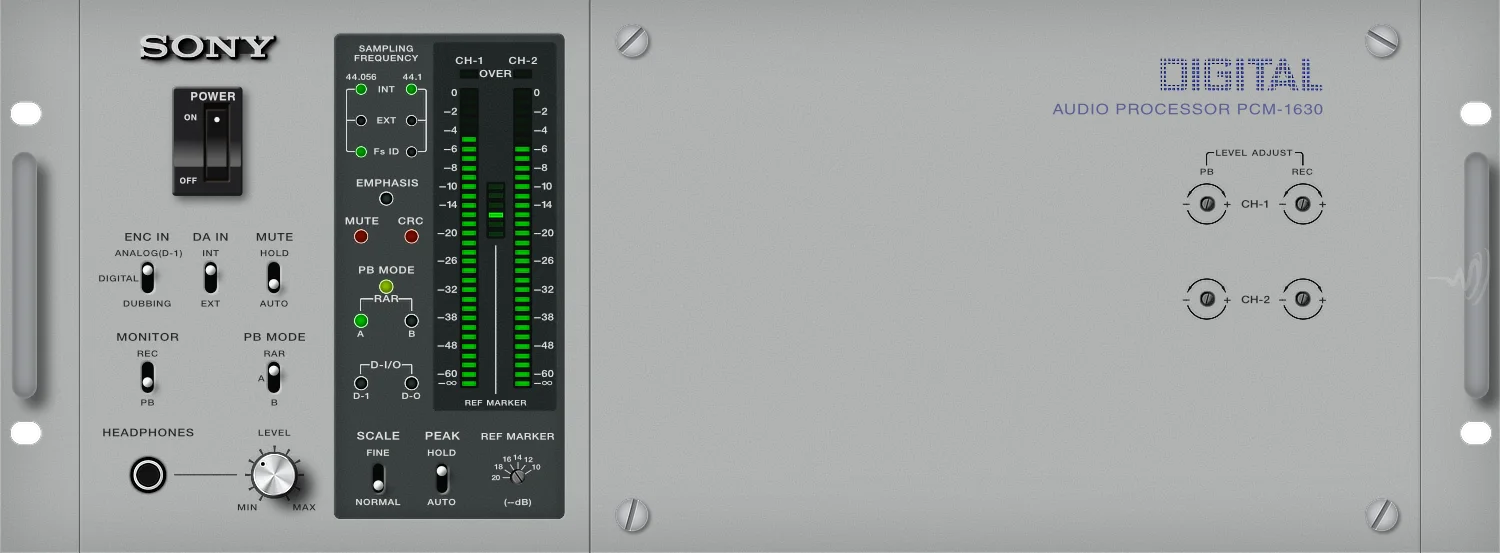
Sony PCM-1630 and JVC VP-900 D/A Converter sfor Stereo Master Recording to video tape based recorders.
Digital Audio Tape (DAT) and the Portable Digital Revolution
By the mid-1980s, digital recording was no longer confined to large-format multitrack systems and specialist mastering setups. The introduction of Digital Audio Tape, or DAT, brought two-channel digital recording into a far smaller and more affordable format.
Using compact cassette-style media, DAT recorders offered high-quality digital stereo capture in a portable form factor. For studios, DAT quickly became a convenient mastering medium. For location recordists and broadcast engineers, it provided reliable digital recording outside the traditional studio environment.
DAT’s impact extended beyond convenience. It standardised digital two-track delivery for many professional workflows and became a common format for mix masters, reference copies and archive recordings. At the same time, its accessibility raised concerns within the music industry about perfect digital copying, highlighting how technological shifts often carried broader implications.
Although DAT would eventually be eclipsed by hard disk and file-based systems, its widespread adoption marked a decisive moment when digital recording became practical not just for elite facilities, but for a far broader segment of the industry.
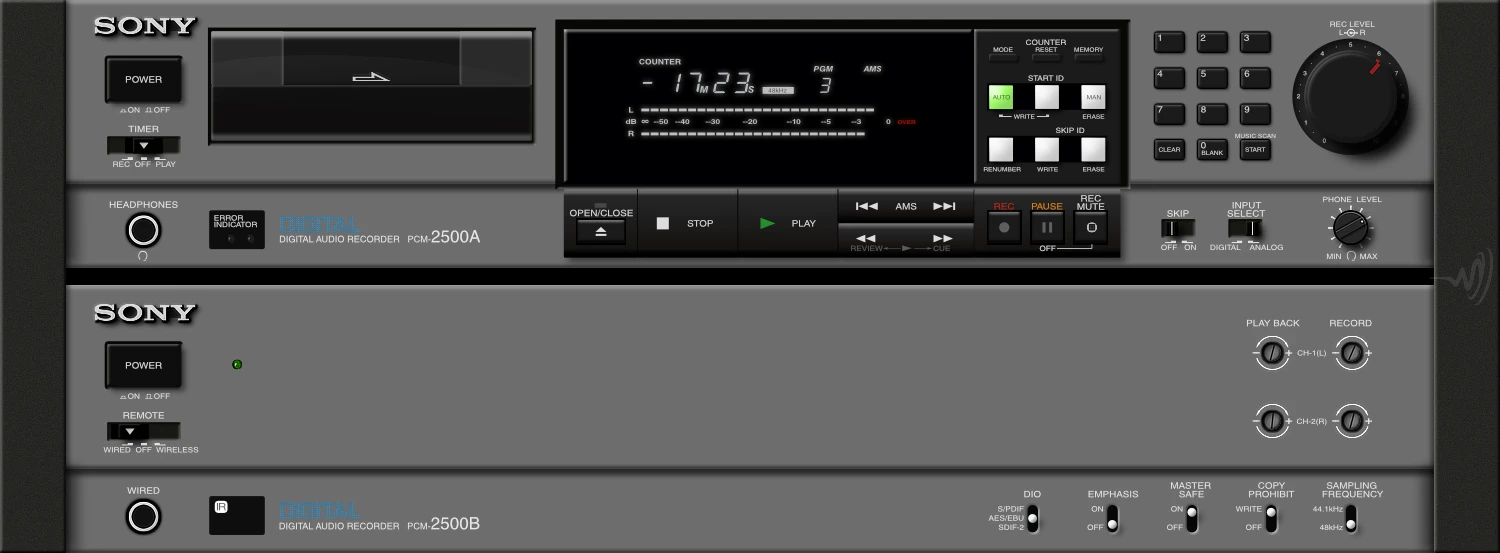
Sony PCM-2500 DAT Recorder, based on the Sony DTC-1000ES consumer machine.

ADAT and DTRS: Modular Digital Multitrack for the Project Studio
If early digital multitrack systems were aimed at major commercial studios, the early 1990s saw a decisive shift toward accessibility. Alesis introduced ADAT in 1991, a modular eight-track digital recorder that used S-VHS cassette media as its recording format.
Crucially, multiple ADAT machines could be synchronised, allowing studios to scale from eight tracks to sixteen, twenty-four or beyond at a fraction of the cost of large-format digital systems. For the first time, digital multitrack recording became realistic for smaller facilities and independent producers.
Shortly after, TASCAM introduced DTRS, or Digital Tape Recording System, which debuted with the TASCAM DA-88 and used Hi8 video cassette media. Like ADAT, DTRS was modular and expandable, but it offered its own technical approach and quickly gained traction in professional environments. Both formats relied on familiar cassette-based media, which helped reduce manufacturing costs and simplified distribution.
The ability to build a digital multitrack system incrementally transformed the economics of recording, enabling project studios, educational institutions and regional facilities to adopt digital workflows without the capital investment required by earlier DASH or Mitsubishi systems. This democratisation of digital multitrack recording would have lasting consequences for how and where music was produced.

The revolutionary Alesis ADAT brought digital multitrack recording to the masses.
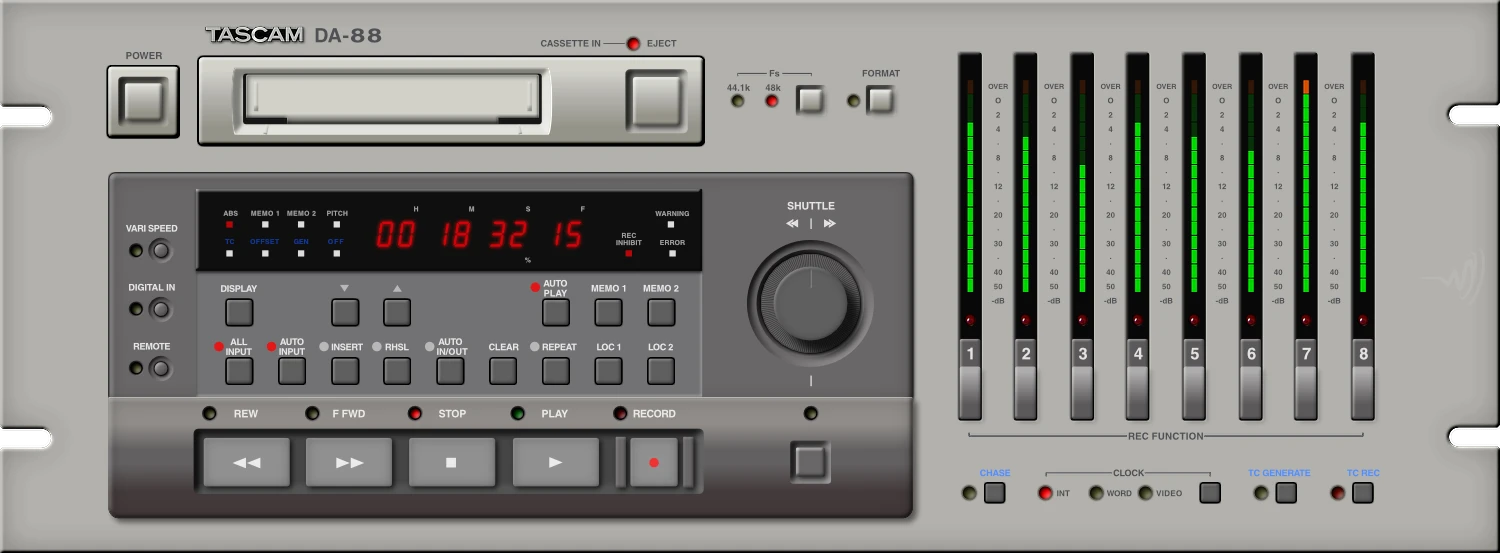
The TASCAM DA-88 was the only competion for the ADAT, and offered a more reliable platform and better sound.
Why Some Formats Failed and Others Endured
The rapid emergence of multiple digital recording formats during the 1980s and 1990s created a competitive and often fragmented landscape. Not every system survived. Some formats were limited by cost, others by proprietary design, and many by the pace of technological change. Large-format professional systems such as DASH required significant investment in both hardware and maintenance, which restricted adoption to well-funded studios. As digital technology advanced and hard disk recording matured, the economics that once justified these systems became harder to sustain.
Modular formats such as ADAT and DTRS achieved broader adoption because they reduced the financial barrier to entry and allowed studios to expand gradually. However, even these systems were ultimately overtaken by computer-based recording. As processing power increased and storage became more affordable, hard disk systems eliminated the need for tape-based digital formats altogether. Editing became faster, recall became simpler, and file-based workflows proved more flexible than any cassette-based medium. The success or failure of each format was shaped not only by sound quality, but by scalability, cost, workflow efficiency and the industry’s shifting expectations around production and delivery.
The Transition to Hard Disk and the End of the Tape-Based Era
By the mid to late 1990s, the momentum behind tape-based digital systems began to slow as hard disk recording became increasingly viable. Before fully software-based systems took control of the studio, a number of dedicated hardware recorders emerged that stored audio directly to internal or external hard drives.
These machines retained a familiar tape-machine style workflow while removing the mechanical limitations of cassette and reel-based media. They offered instant access to audio, non-linear editing and improved reliability without the need for synchronising multiple transports.
This period represented a transitional stage rather than an overnight revolution. Many studios adopted standalone hard disk recorders while continuing to run ADAT or DTRS machines, often transferring projects between formats.
The workflow remained recognisably studio-centric, with physical control surfaces and rackmount hardware replacing tape decks rather than computers replacing the studio itself. Only gradually did fully integrated digital audio workstations move from specialist tools to mainstream production platforms.
As processing power increased and storage costs fell, computer-based systems offered greater editing flexibility, easier recall and more scalable track counts than any tape-based digital format. By the early 2000s, the combination of software editing and file-based storage had rendered cassette and reel-based digital multitrack systems largely obsolete.
The end of tape-based digital recording did not occur with the arrival of the first DAW, but through a phased transition that began with dedicated hard disk recorders and ultimately reshaped studio production around non-linear, computer-driven workflows.
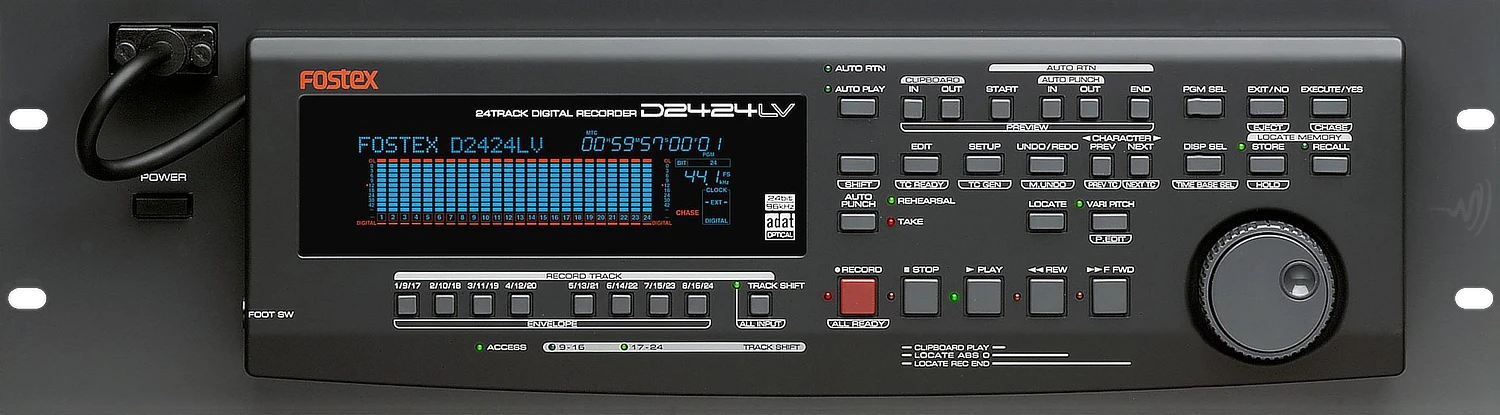
The Fostex D2424LV was a very popular machine, offering 24 tracks of high-quality recording to hard disk.

The Genex GX8500 was one of many 8 channel, multi format digital audio recorders designed for multichannel recording.
A Decade of Format Wars and Lasting Influence
The digital recording landscape of the 1980s and 1990s was defined less by a single technological breakthrough and more by competition between multiple approaches. Large-format professional systems such as DASH established digital multitrack recording at the highest level, while PCM-based stereo recorders and DAT standardised digital mastering and delivery.
ADAT and DTRS then brought modular digital multitrack within reach of smaller studios, dramatically expanding access to professional production tools. Each format addressed a different segment of the industry, and together they accelerated the shift away from analogue tape.
Although many of these systems have long since been retired, their influence remains visible in modern recording workflows. Concepts such as synchronised multitrack expansion, digital master delivery, and hybrid studio integration were refined during this period. The competition between formats also shaped expectations around reliability, editing flexibility and scalability, expectations that would later be fulfilled more completely by hard disk and software-based systems.
Understanding the most important digital studio formats of the 1980s and 1990s is therefore not simply an exercise in nostalgia, but a way of tracing how contemporary recording practice evolved from a period of rapid technological experimentation and change.
The transition from analogue to digital recording was not a single event, but a layered progression shaped by competing technologies and changing studio economics. From high-end multitrack systems such as DASH, through PCM-based stereo mastering, to the widespread adoption of DAT, ADAT and DTRS, each format addressed a specific need within the industry. Some were designed for major commercial facilities, others for emerging project studios, but all contributed to the gradual normalisation of digital workflows. By the time hard disk recording became dominant, many of these tape-based digital formats had already laid the groundwork for modern production. They redefined expectations around noise, stability, recall and scalability, and in doing so reshaped how studios operated. The legacy of the 1980s and 1990s format era can still be seen in today’s digital audio workstations, modular expansion systems and hybrid studio designs, all of which evolved from the competitive and transformative period that redefined professional recording.