Cult Classics

A Cult Classic is a piece of gear that never aimed for mass appeal yet earned unwavering devotion from those who discovered it. These are the oddballs, the overlooked designs, the experiments that were either ahead of their time or simply too unusual for the mainstream. What they lacked in widespread adoption they made up for in character, charm, and a sound that engineers still chase. Cult classics inspire loyalty because they do something no other box quite manages, and the people who love them would never part with them.

1974
Analogue Delays
/ Made In Japan
The Roland RE-201 when it was released in 1974, was an engineering masterpiece. It featured a sophisticated tape-echo effect and a built-in spring reverb, with different sound variations selectable via 12 different operating modes.
1975
Other Digital Effects
Made In U.S.A. /
The Eventide Model H910 Harmonizer was developed by Eventide in 1974. It was the world's very first digital effects processor. It combined ‘de-glitched’ pitch change with delay and feedback. It could be controlled by a keyboard remote control to instantly shift pitch in half steps.
1977
Other Digital Effects
/ Made In U.S.A.
The Eventide Model H949 Harmonizer is a combination digital delay line, pitch changer, and all-round special effects unit. The TIME REVERSAL feature is entirely new. When used with a variable-speed tape recorder, the Harmonizer is capable of shortening or lengthening a piece of program material to fit a given time slot, without altering the pitch.
1978
Digital Reverbs
Made In Germany /
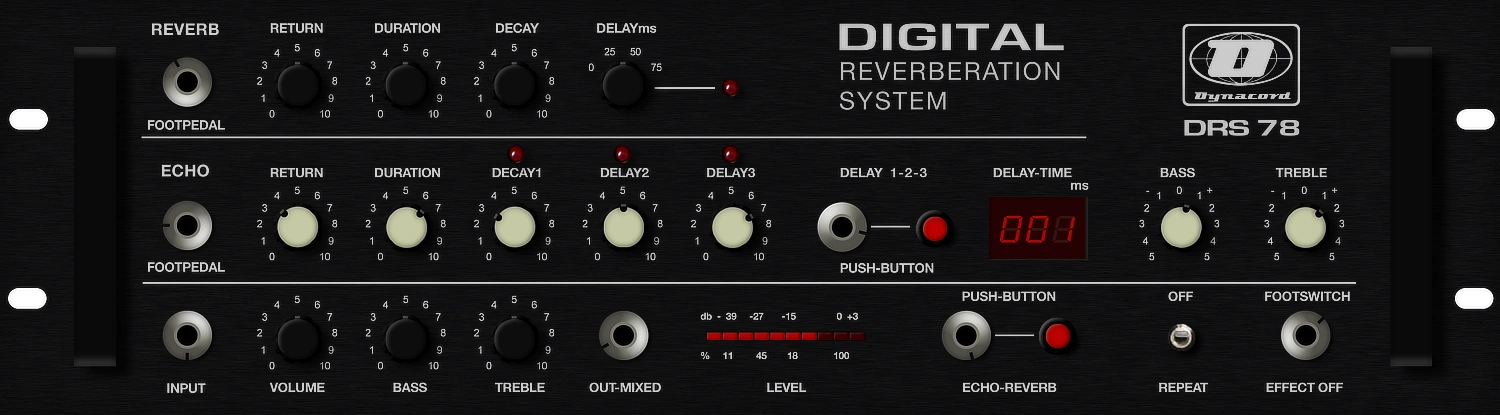
The first point of make clear about the Dynacord DRS 78 is that it is a digital echo and reverb system in a three-rack unit high enclosure. Besides giving a very wide range of reverb and echo effects it produces above all true and absolutely natural reverb effects as they have been obtainable so far only in studios or in cathedrals.
1978
Digital Reverbs
/ Made In U.S.A.
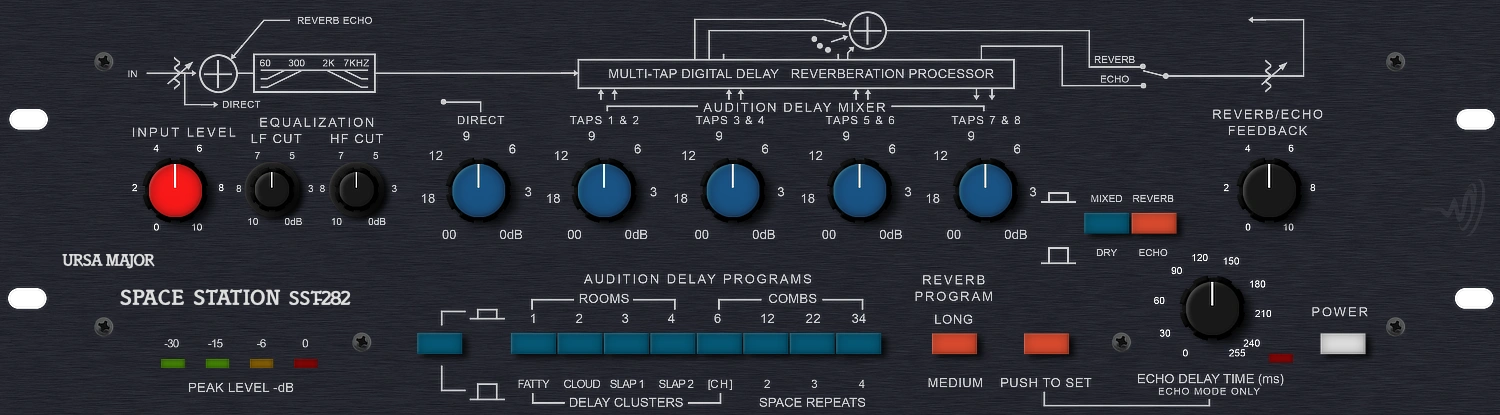
The Ursa Major SPACE STATION is an advanced signal processor using time delay techniques to transform a mono source into a new, stereo, output signal.  It is as different from earlier delay units as the complex reverberant sound of a room is from a single repeat of a sound slapping off a wall.
1979
Compressors & Limiters
Made In U.S.A. /
The Urei 1178 compressor was introduced in 1979 by Universal Audio. It became a popular choice in recording studios during the late 1970s and throughout the 1980s, and it remains a sought-after vintage piece of audio equipment today.
1982
Digital Delays
/ Made In Japan
The Korg SDD-3000 is one of those effects that has retained it's appeal even after decades of newer product coming after it. The Korg SDD-3000 digital delay has remained so popular that Korg themselves have re-introduced it in a guitar pedal form, as it was guitarists that fell in love with this very capable delay.
1982
Digital Reverbs
Made In Germany /
The Quantec Room Simulator was a new technical concept that enabled emulating the acoustical behaviour common to spaces of any volume or size, so that acoustical impressions ranging from a tin can to a columned cathedral could be synthesised and created at fingertip command.
1982
Multitrack Cassette Tape Recorders
/ Made In Japan
In 1982, Tascam introduced the Tascam 244 Portastudio, revolutionising the recording world, especially for home musicians. This four-track cassette recorder made high-quality multi-track recording more accessible and allowed musicians to create complex demos from home. It also impacted professional studios by enabling artists to pre-produce tracks more efficiently, marking a turning point in music production history.
1984
Other Digital Effects
Made In France /
The Publison Infernal Machine 90 Stereo Audio Computer was a French 16-bit dual-channel digital processor introduced in 1984. It combined delay, echo, independent pitch-shifting, stereo reverberation, sampling, time compression and time expansion in a programmable and expandable system. MIDI, optional SMPTE/EBU synchronisation, computer control, digital audio interfacing and a dedicated remote allowed the Publison Infernal Machine 90 to operate as both a studio effects processor and an early digital audio workstation.

Think we have missed one that clearly meets the criteria above? Send a correction with sources and we will review.

Continue Exploring Iconic Studio Gear