

The Eventide Model H910 Harmonizer is a legendary piece of music technology that was first introduced in 1974. It was created by Eventide co-founders Richard Factor and Tony Agnello, who set out to create a digital pitch-shifting device that could be used to manipulate the pitch of recorded sounds.
The Eventide Model H910 was a groundbreaking device that used a combination of digital and analogue circuitry to achieve its unique sound. It was one of the first devices to use microprocessors, and it was also the first device to use a random-access memory (RAM) chip for storing digital audio. This allowed it to perform real-time pitch-shifting and harmonising, something that was previously impossible with analogue equipment.
The Eventide Model H910 quickly gained popularity among musicians and producers, thanks to its ability to create otherworldly effects and transform the sound of any instrument or voice. It was used by a wide range of artists, including David Bowie, Brian Eno, Frank Zappa, and even on the iconic theme song for the television show “Doctor Who.”
One of the most notable features of the H910 was its ability to create harmonies in real-time. It allowed users to set the desired pitch shift, and a “harmonizer” display that allowed them to select the interval between the original note and the harmonised note. The result was a rich, otherworldly sound that could be used to create complex harmonies or to add an extra dimension to a solo instrument or vocal performance.
Another feature of the Eventide Model H910 was its ability to create flanging and phasing effects. By adjusting the delay and feedback settings, users could create swirling, psychedelic sounds that were perfect for creating spacey, atmospheric textures.
Over the years, Eventide released several updated versions of the H910, including the Eventide H949 and Eventide H3000. These devices added new features and improved the sound quality, but the H910 remained a favourite among musicians and producers for its unique sound and versatility.
Today, the Eventide Model H910 remains a highly sought-after piece of music technology. Its impact on the recording industry and popular music cannot be overstated, and its legacy continues to be felt today through its influence on modern pitch-shifting and harmonising effects.
Features
- Real-time digital pitch-shifting and harmonising
- Hybrid digital and analogue circuitry
- Microprocessor-based design
- RAM-based digital audio storage
- Continuously variable pitch manipulation
- Interval-based harmony creation
- Delay-based flanging and phasing effects
- Suitable for vocals, instruments, and studio effects processing
- Distinctive character used for experimental, atmospheric, and otherworldly sounds
- Influential design that helped shape later pitch-shifting and harmonising effects
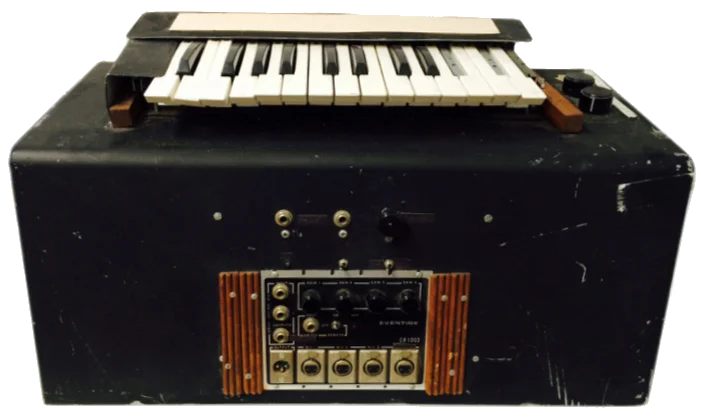
An early prototype of the Eventide Model 910, kindly supplied by Eventide.



One Response
The human league gave this a good ole workout on travelogue album 1980 and the open your heart 1981 remix for love and dancing sound partials overdriven sound so complex bubbling other worldly and soundscapey!!
Also giorgio moroder used this beautifully on donna summers 1979 bad girls album, the intro to journey to the centre of your heart is a case in point regarding the beautiful delay effect the 910 could create, the rythmn guitar delays and pans exquisitely.
This was bbc tv’s effects unit de jour! of the mid 70’s to early 80’s, dr who hitch hickers blake’s seven loads of other progs by them also a 1984 itv series called chocky used the 910 for the alien voice. oooh and the 910 was used to very eerie effect on that awful film galaxy of terror, the opening scenes of the desolate planet is scored with the eery glitchy pitch shift ovedriven and sounds ded off and totally sonically scary lol but the film is tosh lol.
Lovely old but still very useful tech, i nearly bought one 6 yrs ago for 900 quid i could kick me own arse for not gettin’ it.
Aw well!