Digital Reverbs

Digital reverb units transformed studio production by replacing physical echo chambers and mechanical plates with programmable signal processing. Emerging in the late 1970s with pioneering systems such as the EMT 250 and Lexicon 224, digital reverb quickly became central to professional mixing, post production and sound design. Its precision, recallability and compact form allowed engineers to create realistic rooms, halls and synthetic spaces without the physical limitations of acoustic environments.

Throughout the 1980s and 1990s, digital reverb units defined the sound of countless recordings. From early algorithmic processors to advanced convolution and hybrid systems, these devices shaped vocal ambience, drum spaces and spatial depth across genres. Today, both classic hardware and modern digital processors continue to influence studio workflows, bridging the heritage of vintage recording technology with contemporary production techniques.

Decades
Made In Germany
Released in 1982 /
The EMT 245 Digital Reverb, introduced in 1982 as a successor to the 244, offered enhanced features like adjustable pre-delay and early reflections in a compact, affordable design. Known for its dense and rich reverb tails, it provided a vintage yet precise sound, appealing to smaller studios and professionals alike.
Made In U.S.A.
Released in 1982 /
The Eventide SP 2016 Effects Processor Reverb is something special. If you’ve never worked with one before, your ears are in for a pleasant surprise. What makes the Eventide SP 2016 so unusual is that (unlike most products in this specialised age) it isn’t just one thing. Not simply a reverb or a digital delay, or an equaliser…but all of these things, and more.
Made In U.S.A.
Released in 1983 /
The Lexicon 224X Digital Reverberator provides high-quality simulation of the acoustics of a variety of architectural spaces and a wide variety of special effects. The Lexicon 224X is an advanced two-in, four-out, all-electronic digital reverberation system. Its clean, natural-sounding reverberation is the result of blending digital audio hardware and software disciplines.
Made In Japan
Released in 1983 /
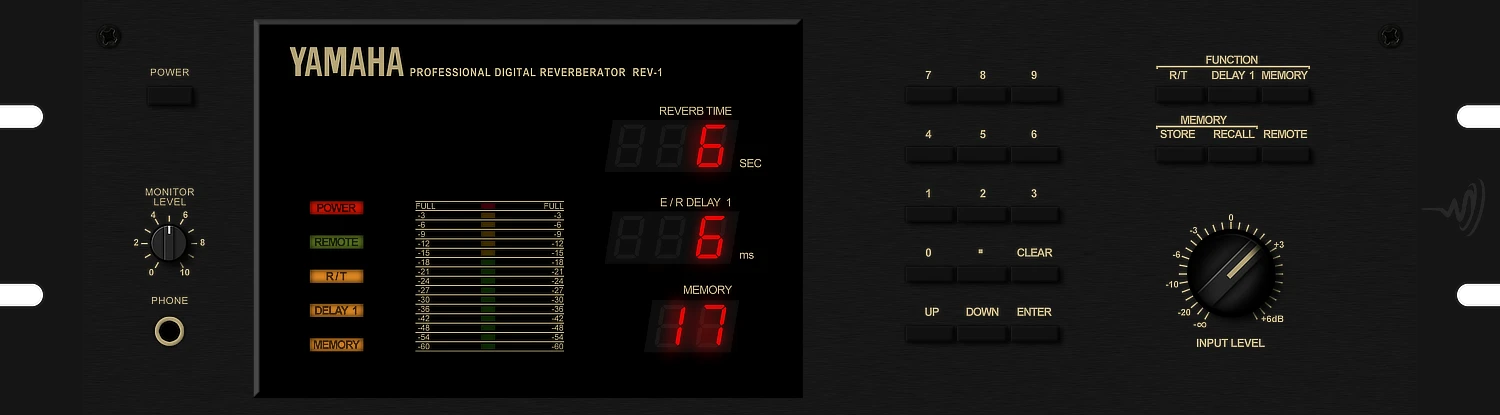
The Yamaha Rev1 is a professional digital reverberator with 1 in and 2 outs. Various reverberation effects can be added to original sounds by allowing early reflections and subsequent reverberation to be independently controlled and mixed.
Explore the full Series
Made In U.S.A.
Released in 1983 /
The Ursa Major StarGate 323 is a vintage digital reverb unit from the mid-1980s that built on the company’s earlier Space Station and 8X32 designs, delivering flexible algorithmic reverberation in a comparatively affordable rackmounted box. It impressed reviewers with its clear controls, eight distinct room simulations and musically useful decay and tone shaping, making it a valuable tool for smaller studios that wanted quality ambience without the cost of top-end systems.
Made In Japan
Released in 1984 /
After working on delivering a high end digital reverb in the Yamaha REV1, they decided to tackle the other end of the market with the Yamaha R1000 digital reverb. By comparison, the Yamaha R1000 was most definitely not in the same league as it’s more expensive sibling, but it afforded home musicians a taste of digital reverb that delivered pretty good results.
Made In U.S.A.
Released in 1984 /
The Ursa Major StarGate 626 is an expanded digital reverb and effects processor that builds directly on the StarGate 323 architecture, adding new programs and extended delay capabilities while retaining the original room algorithms. With increased memory and additional processing modes, it extends the StarGate concept into longer decays, complex delay structures, and more experimental spatial effects.
Made In U.S.A.
Released in 1984 /
There are times when you won’t compromise on sound quality. When, no matter how difficult the material is, you must have reverberant effects that are perfectly smooth, clean, spacious, colourless. There are perhaps three or four computer-based digital reverb systems that achieve uncompromising sound quality. All sound quite natural (and relatively alike).
Made In U.S.A.
Released in 1984 /
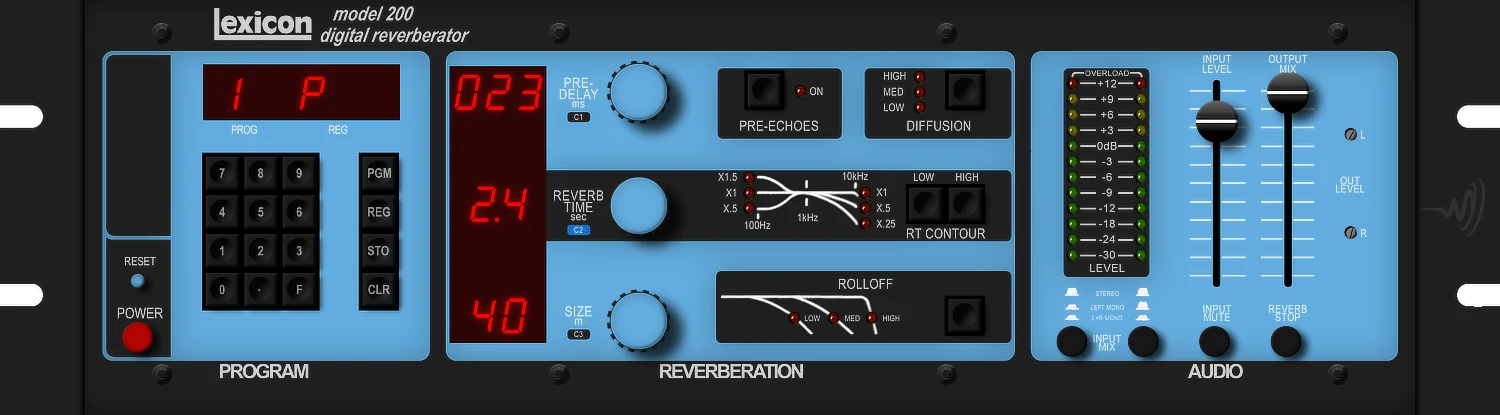
The Lexicon Model 200 was introduced as a more affordable reverb after the success of the Lexicon 224 had enjoyed, but it did not find favour with larger studios as the 224 did. The Lexicon Model 200 Digital Reverberator is an economical, general purpose digital reverberation device designed for recording studios, musicians, film/video production houses, and broadcasters.
Made In U.S.A.
Released in 1984 /
The Lexicon PCM 60 was the first in a long line of PCM named digital reverbs and it offered an affordable entry into the world of Lexicon digital reverbs. The Lexicon PCM 60 was a good digital reverb however it never enjoyed the same sales or current legendary status as the later model Lexicon PCM 70 would enjoy upon its release.
Explore the full Series
Made In U.S.A.
Released in 1984 /
The Lexicon 224XL, released in 1984, is a high-end digital reverb unit renowned for its lush, musical reverberation and intuitive control interface. An evolution of the original 224 and 224X models, the 224XL introduced the Lexicon Alphanumeric Remote Control (LARC), enhancing user interaction and parameter control.
Made In U.K.
Released in 1984 /
Often referred to as the poor man’s AMS RMX 16, the Klark Teknik DN 780 is a great reverb in its own right and has maintained a loyal following over the years. The Klark Teknik DN 780 digital Reverb is not simply a reverberation device. The Klark Teknik DN 780 gives the user a unique and flexible means of producing realistic acoustic simulations for environments of all types and sizes.